
Check the venue before you make the trip
A practical guide to confirming machine availability, reading venue information and understanding what “best paying” claims can—and can’t—show.
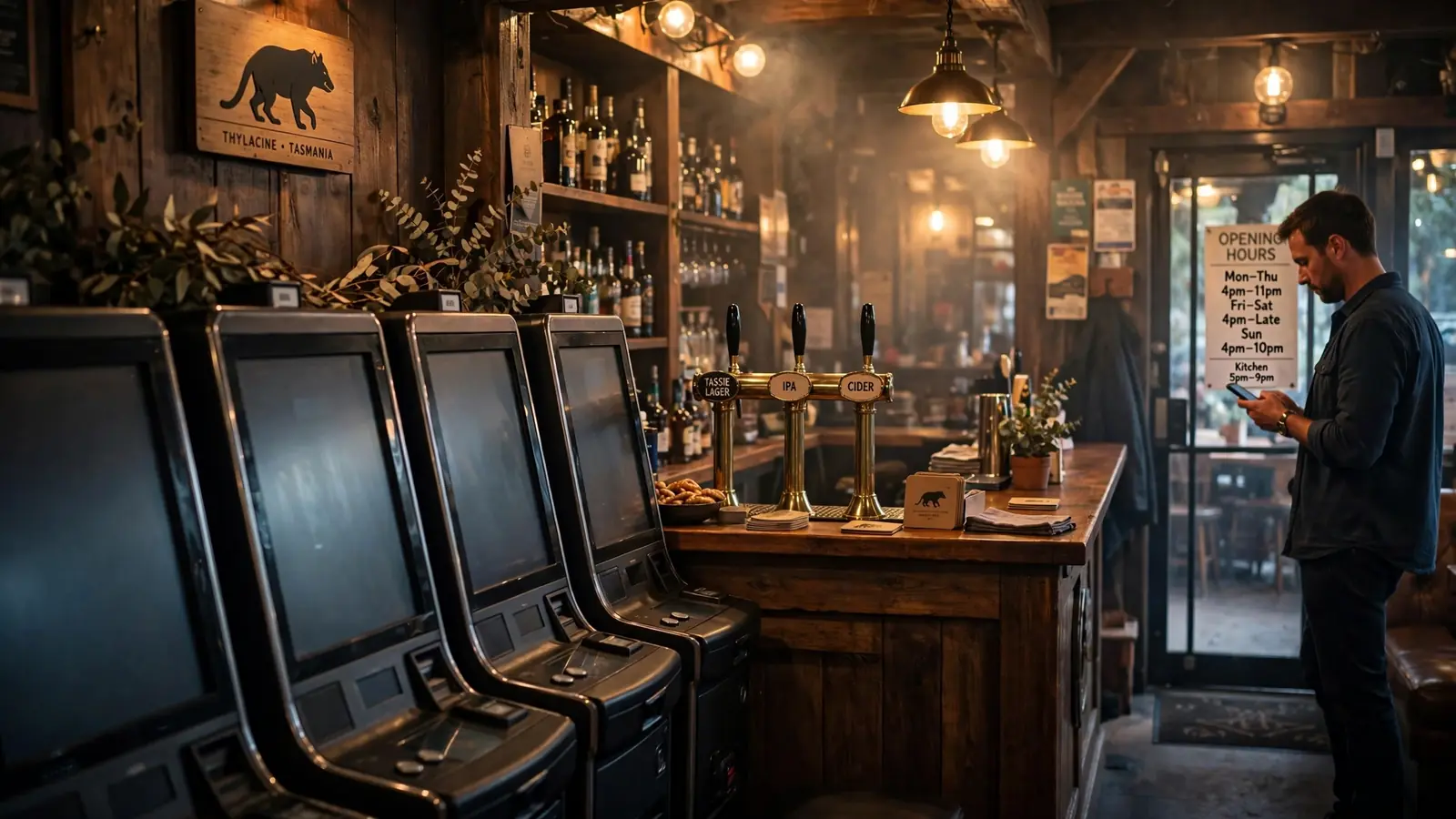
Finding Out What’s Open in Tasmania
When I want to know whether I can play pokies somewhere now, I’ve learned not to treat a search result as a door that’s definitely open. A listing can be out of date, and a venue’s usual hours don’t answer the question for this particular day. The useful answer is the one tied to the venue and the time you plan to arrive.
There’s a small but important distinction between a place being open and pokies being available to play. If you’re checking before setting out, ask about both. A venue might be open for another purpose while its gaming area isn’t operating, or the hours shown online might describe the premises rather than machine availability. Don’t assume one automatically means the other.
I used to see a confident-looking “open now” label and take it as a promise. It isn’t. Treat it as a lead, then look for a current notice from the venue or contact the venue directly. If you call, be specific: “Are the pokies operating now?” is clearer than “Are you open?” If you’re planning a later visit, ask about the time you’ll arrive rather than relying on a general answer about today.
That extra check matters even when the information looks recent. A venue’s hours can change, and a page may not explain whether a temporary change affects the gaming area. A social post, map listing or directory entry can help you find a contact route, but I wouldn’t use any one of them as proof that machines are running at the moment you get there. A quick confirmation beats turning up to find your plan doesn’t fit.
What to check before you go
Keep it simple. Find the venue’s own contact details, then ask:
- Is the venue open at the time I plan to arrive?
- Are the pokies operating then?
- Has anything changed today that affects those hours?
Those are practical questions, not a demand for a guarantee. If the person answering can’t confirm machine availability, you have your answer: don’t build the trip around an assumption. You can check again closer to the time, or make another plan.
Be careful with phrases such as “open late” or “early opening”. They sound useful but don’t tell you what you need unless they refer to the right venue, the right date and the gaming area itself. The same goes for a page that says a place is open around the clock. Read what the statement actually describes before relying on it. “Open” can refer to a business or part of a premises; it doesn’t, on its own, tell you that pokies are operating.
I also wouldn’t infer anything from a venue’s name, reputation or the fact that it appears in a list of places to visit. None of those tells you its current operating status. And a result that appears near the top of a map or directory isn’t necessarily the newest one. The best check is a direct, current answer from the venue, with the gaming hours made explicit.
If you’re already nearby, the same rule applies: don’t assume that seeing lights on or people inside means the pokies are available. Ask staff whether the machines are operating before you settle in. It’s a plain question, and it can save you from making a decision based on appearances.
I know this sounds less exciting than a neat list marked “open now”. But a list can’t account for a change that happened after it was updated. Nor can a general label tell you whether you’ll be able to play when you arrive. For a specific Tasmanian venue, the practical answer has to come from a current check with that venue—not from a broad claim about Tasmania as a whole.
One more thing: don’t let urgency do the thinking for you. If you can’t get a clear answer, waiting or choosing something else is better than travelling on a guess. I’ve made plans around information that looked certain and found out too late that I’d read more into it than it said. Not worth it.
What “Best Paying” Can—and Can’t—Tell You
Top operators
If you’re looking for pokies options in Tasmania in 2026, it helps to check practical details such as payment methods, stated payout times and minimum deposits. Use these notes as a starting point when deciding which options to explore.
-
Ricky Casino
- Payout speed
- crypto under 1 hour, PayID 1-3 business days
- Min. deposit
- A$20 (A$30 to qualify for the bonus)
Ricky Casino lists crypto payouts in under an hour and PayID payouts in 1–3 business days. The minimum deposit is A$20, or A$30 to qualify for the bonus.
-
SkyCrown
- License
- Tobique Gaming Commission
- Payout speed
- crypto ~10-15 minutes, fiat 1-5 days
- Min. deposit
- A$30
SkyCrown lists a Tobique Gaming Commission licence and crypto payouts in about 10–15 minutes; fiat payouts take 1–5 days. Its minimum deposit is A$30.
-
LevelUp Casino
- License
- Curacao eGaming OGL/2023/174/0082 (Dama N.V.)
- Min. deposit
- A$15
LevelUp Casino lists a Curacao eGaming licence, OGL/2023/174/0082, held by Dama N.V. Its minimum deposit is A$15.
-
JustCasino
- License
- Curacao Gaming Control Board
JustCasino lists a Curacao Gaming Control Board licence, a licensing detail you can consider when reviewing the operator.
-
House of Pokies
- License
- international iGaming licence – jurisdiction not named in the source
- Payout speed
- PayID 1-24 hours
- Min. deposit
- A$30 (PayID from A$10)
House of Pokies lists PayID payouts in 1–24 hours and a A$30 minimum deposit, with PayID deposits from A$10. Its source describes the licence as international iGaming but does not name the jurisdiction.
-
WinSpirit Casino
- License
- Curacao eGaming OGL/2024/923/0383 (Antillephone N.V.)
- Min. deposit
- A$30
WinSpirit Casino lists a Curacao eGaming licence, OGL/2024/923/0383, held by Antillephone N.V. Its minimum deposit is A$30.
-
Bizzo Casino
- License
- Curacao Gaming Control Board (TechSolutions Group N.V.)
Bizzo Casino lists a Curacao Gaming Control Board licence associated with TechSolutions Group N.V.
-
Kingmaker
- Payout speed
- crypto ~90 minutes, fiat 1-5 days
- Min. deposit
- A$30
Kingmaker lists crypto payouts in about 90 minutes and fiat payouts in 1–5 days. Its minimum deposit is A$30.
-
Wild Tokyo
- License
- Curacao
- Payout speed
- crypto 30-60 minutes, fiat 1-5 days
- Min. deposit
- A$10
Wild Tokyo lists a Curacao licence, crypto payouts in 30–60 minutes and fiat payouts in 1–5 days. Its minimum deposit is A$10.
-
LuckyVibe
- License
- Curacao Gaming Control Board OGL/2023/176/0095 (Hollycorn N.V.)
LuckyVibe lists a Curacao Gaming Control Board licence, OGL/2023/176/0095, held by Hollycorn N.V.
“Best paying” sounds like a clear promise: choose the right pokie and it will send more back. I used to read return figures that way. They are not a forecast for your session, though, and a title’s advertised return does not tell you what your next spin will do.
RTP, or return to player, is a theoretical percentage calculated across a very large number of plays. It describes the share of wagers a game is designed to return over that long run, not a personal refund or a target that the game must reach while you are playing. A session can end far above or below that figure. The gap between the maths and the lived experience is where the phrase “best paying” gets slippery.
There is another detail worth checking. A specialist review reports that some game providers let casinos choose between different RTP settings for the same pokie. If that applies to a particular game, its return percentage may vary from one casino to another. Seeing a familiar title in two places does not, by itself, prove that the settings match.
That doesn’t mean you can assume every game has multiple versions, or that a casino has chosen a particular setting. It means the title alone is not enough to establish its RTP. Look for a figure attached to the actual game and the casino offering it, and check whether the information explains which setting applies. If the figure is absent or unclear, there is no solid basis for comparing its return with another version.
Even a clearly stated RTP has limits. It is not a guarantee that a casino will pay you a certain amount, nor does it identify a “hot” machine. It cannot tell you whether a short session will end in a win. I once treated a higher-looking percentage as if it made a result more likely right then. That was me reading a long-run statistic as a short-run promise. Wrong tool.
The result of each spin is determined independently by a Random Number Generator, or RNG. In practical terms, the previous spin does not set up the next one. A run of losses does not mean a win is due, and a recent win does not make another one more likely. The game is not keeping a running account of what you are owed.
This also makes claims about a pokie being “due” poor grounds for choosing what to play. A machine’s history might feel persuasive when you are watching it, but past outcomes do not change the independent random determination of a new spin. I know how tempting it is to tell yourself the pattern is obvious. It isn’t evidence.
So, if you are comparing pokies associated with Tasmania, separate two questions that often get bundled together: what return setting is stated for the version being offered, and what can any single session actually deliver? The first may help you understand the game’s theoretical design. The second remains uncertain. Neither one turns “best” into a reliable promise of winnings.
Do
- Treat published RTP as information about long-term game maths
- Check if the return figure is connected to the specific version being offered
Don't
- Use RTP as a prediction for a single session's results
- Assume a "generous" claim is evidence of guaranteed winnings
A return figure can be useful as a comparison point when it is specific and clearly connected to the version in front of you. But it cannot rank every pokie fairly without comparable information, and it cannot tell you that a particular game will suit your budget or play style. Nor does a higher RTP remove the possibility of losing the money you stake.
My rule now is plain: treat a published RTP as information about long-term game maths, not a prediction for tonight. If a claim leans on a game being “generous” without explaining the setting or what the percentage means, I don’t take the adjective as evidence. Good to know. Not a promise.
Getting to a Venue from the Airport or CBD
When I’m trying to work out whether a venue is genuinely convenient, “near the airport” is not enough to plan around. It sounds precise, but it leaves out the detail that matters: which airport, which part of town and the exact venue address. The same goes for a CBD search. A result described as central can still be awkward for your actual starting point.
I would pin down the venue first, then check its street address against the airport, suburb or CBD where I’ll be. If the listing does not give a clear address, I would not treat a broad description as directions. A map can help you compare locations once you have a specific destination; it cannot make an unclear listing precise.
 Progressive Jackpot Slots: How the Pools WorkLearn how progressive pools grow, why their totals cannot predict a win, and why contribution rates vary: the text cites ranges of…
 Pokies in Melbourne: What to Check Before You PlayLearn how RTP settings can vary by game version, what venue rules and player protections to check, and why online pokies searches…
There is another trap in searches for pokies near a Tasmanian airport: the island has more than one place a traveller might mean by “the airport”. A search result that merely mentions Tasmania does not tell you which airport it refers to, or whether the venue is nearby in any useful sense. Match the airport and the venue by name and address before making plans. Otherwise, you are comparing a vague label with a real journey.
“Near the CBD” needs the same check. CBD can refer to a central business district, but that does not identify a particular venue or establish how easy it is to reach. If you are already in a city centre, start with the exact address and your own starting point. If you are arriving elsewhere, do not assume that a venue described as central will be close to your airport or your accommodation.
I used to read “nearby” as if it were a measurement. It isn’t. It is a description, and without a named destination it cannot tell you how long a trip will take, what transport is available or whether the route suits you. Those details depend on the place and the day, so I would check them directly rather than fill in the blanks from a headline.
A search that includes Victoria can muddy things further. Tasmania and Victoria are separate states, divided by water; a result mentioning both does not make a Tasmanian venue a local stop from a Victorian starting point. Be clear about which side you are on and which destination you mean. If you are planning a trip across the divide, treat the journey as a separate part of the plan, not as a short hop implied by the word “near”.
Verifying Venue Location
-
1
Identify the venue
Pin down the specific venue first and find its street address.
-
2
Cross-reference location
Check the address against your starting point, such as the specific airport, suburb, or CBD.
-
3
Confirm the route
Verify the final route with a current map or transport provider before setting off.
For northern Tasmania, narrow the destination to the town or suburb you actually intend to visit, then look for a venue with a clear address there. A broad regional label can return results that are not close to your starting point. The same caution applies when searching from your current location: a “near me” result is only useful if the location shown is the one you are in and the destination is specific.
I would not book transport, change an itinerary or set off based only on a search snippet. Find the venue’s address, check it against your starting point and confirm the route with a current map or transport provider. Less guesswork.
What Venue Rules Can Tell You
A venue’s reputation does not tell you how it responds when someone is struggling. I used to treat a polished room and a busy floor as signs that everything was being handled properly. They aren’t. The more useful question is what oversight is required while the machines are in operation.
A report by regionriverina.com.au describes a requirement for venues with more than 20 gaming machines to have a dedicated responsible gambling officer (RGO) on duty while those machines are operating, from 1 July. That is a specific staffing condition, not a general promise that every venue has the same arrangements. It also does not tell you which Tasmanian venues meet the threshold. So I wouldn’t use it to rank places or assume that a particular venue has an RGO on duty.

The role matters because the requirement links oversight to the period when machines are running. If you are visiting a venue, you can ask whether an RGO is on duty and how patrons can get help. That is a practical way to understand what support is available without relying on a vague label like “responsible” in promotional material. A policy on a wall is one thing. Knowing who to approach is more useful.
The same report says venues will be required to keep a gambling incident register. It is intended to capture details of incidents, including situations where a patron’s behaviour suggests they may be at risk of, or affected by, gambling harm. This shifts the focus from a venue simply having a policy to keeping a record of concerning events.
A register is not a guarantee that harm will be prevented, and it is not a public scorecard for comparing venues. It is a record-keeping measure. For someone choosing where to play, that distinction matters: a rule can set out what a venue is expected to do, but it cannot tell you how well a particular staff member will respond in the moment.
I have learned not to confuse a rule with a recommendation. A venue can meet a stated requirement and still not be the right place for you. If you feel uneasy, or notice your play getting away from you, you can step away and ask staff for help. You do not need to wait until things become serious.
These requirements are more useful than an unsupported “best venue” claim because they describe oversight and incident recording, rather than promising a particular experience. They still do not establish a directory of Tasmanian venues or show which one is best. For me, the sensible takeaway is modest: ask what support is in place, and judge the answer—not the slogan.
The Spirit of Tasmania, Crown Searches and Online Play
A question about pokies aboard the Spirit of Tasmania is a question about a particular service and what it provides. Searches mentioning Crown are about a named venue. Neither is the same as looking for online pokies from Tasmania, even though the wording can blur those topics together.
I’ve learned not to let a familiar name do the work of proof. A mention of the ferry or Crown does not, by itself, tell you what is available there. Nor does it make an online gambling service connected to either place. Keep the setting clear before you decide what you are looking at.
The online part has a harder line. Under the Interactive Gambling Act 2001, companies cannot lawfully offer real-money online pokies to people in Australia without a domestic licence. No such licences have been issued, so there is no Australian-licensed online casino. That matters whether a site is presented as a Tasmanian option, uses a local-sounding name, or advertises play for real money.
A “no deposit bonus” may sound like a way to try a site without putting money in first. But promotional wording does not change the legal status of the service. It also does not establish that an operator is licensed in Australia. I’d treat a bonus claim as a sales pitch, not a safeguard.
There is a separate risk once money is involved. If an offshore casino refuses to pay winnings, Australian players have no legal recourse in Australia against that operator. That is not a small detail buried in terms and conditions; it can leave you without a local route to recover money. A polished website, customer support chat or confident promise is not the same thing as Australian legal protection.
 Best Pokies in Adelaide: Hours and Venue ChecksLearn why an “open now” listing may not confirm gaming-area access, and how to assess Adelaide venue, online-play and RTP claims.
 Pokies in Geelong: What to Check Before You GoLearn how to check venue listings, opening arrangements and gaming-area access before travelling, and what to verify for Geelong-related searches.
I used to read a neat-looking offer as a sign that someone had checked the important bits. That was a bad shortcut. With online pokies, the key distinction is not whether a page says “Tasmania” or mentions a familiar name. It is whether the service is being offered under an Australian online-casino licence—and there isn’t one.
So keep the searches in their proper lanes: a ferry or Crown question concerns a named place; an online-pokies question concerns a remote service and the law governing it. Don’t let an offer’s wording make those separate things look interchangeable. The risk is real.
Hours, 24-Hour Claims and Responsible Play
A claim that a venue offers pokies around the clock is only useful if it applies to that venue’s actual operating hours. I would not take “24-hour access” as confirmation that a particular place in Tasmania is open now, or that its machines are available at every hour. Opening times can change, and a broad claim may not answer the practical question you have.
I have learned not to build a plan around a vague label. If you are deciding whether to go out, check the venue’s own current opening information or contact it directly before travelling. Confirm the hours for the day you intend to visit, rather than relying on an old listing or an unqualified statement about 24-hour pokies in Tasmania. That is a small check, but it can save a wasted trip.
- Decide on a spending limit before you start
- Determine a session time limit
- Check how the venue's responsible-gambling tools work
- Set limits that reflect what you can afford to lose
Hours and safeguards are separate issues. Knowing when a venue is open does not tell you what support you can use to keep gambling within limits. Standard responsible-gambling tools include deposit limits, loss limits, session time limits and self-exclusion. They are options for setting boundaries; they do not make a session risk-free or guarantee that you will stick to a limit once play begins.
I used to think a limit was something I could sort out later, when I had a better feel for how the night was going. That was backwards. Deciding on a boundary before you start gives you a clearer point to stop, rather than leaving the decision to the moment when you are caught up in play. If you choose to use these tools, check how they work before starting and set limits that reflect what you can afford to lose.
A session time limit can also help distinguish a planned visit from one that keeps stretching. If you find yourself overriding your own stopping point, or returning after deciding to stop, self-exclusion is a stronger option to consider. Taking a break and seeking support can matter more than finding a venue with longer hours.
So, if you are looking for late-night pokies or a place open around the clock, verify the specific opening hours directly. Treat responsible-gambling tools as a separate decision: choose boundaries before play, and use self-exclusion if ordinary limits are not enough. No schedule changes the risk of losing money.
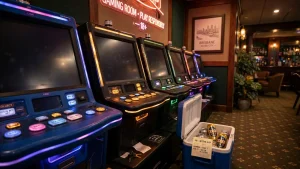
Tasmania Pokies: What a Spin Actually Means
When you sit down at a pokie in Tasmania, a spin can feel like part of a pattern. A few near-misses, a quiet run, then a win: it is easy to read a story into the sequence. I have done exactly that, especially when I was trying to convince myself the next press had to be different.
But a spin does not remember the ones before it. The game uses a Random Number Generator to determine each result, and each spin stands on its own. A losing run does not make a win due, and a recent win does not mean the next result is more likely to be a loss. The sequence can look meaningful without giving you a reliable clue about what comes next.
That matters when you are comparing pokies or thinking about what “best” means. A game’s recent results, a busy screen, or someone else’s story about a lucky session cannot establish what your next spin will do. Past outcomes are just past outcomes. They do not form a countdown.
I used to treat a machine as if it had a mood. If it had been quiet, I would stay longer; if it had paid, I would tell myself I had found the rhythm. That reasoning felt convincing in the moment. It was still guesswork.
The same distinction helps with questions about maximum bets and cash payouts. Those are not predictions of what a spin will return. A maximum bet describes a permitted stake, while a cash payout concerns what the game or venue allows to be paid out; neither turns a random result into a scheduled one. The amount you choose to stake can change how much you risk on a spin, but it cannot make a particular outcome arrive.
So when you are looking at pokies in Tasmania, separate what you can observe from what you hope it means. You can see the result that has just appeared. You cannot use it as evidence that a particular result is coming next. That is the part I kept trying to bargain with.
If you notice yourself increasing a stake because the game “owes” you, pause before pressing again. I have found that naming the thought plainly helps: it is a hunch, not information. A random sequence can produce streaks and clusters, but the sight of one does not make the next spin predictable.
No hidden rhythm.
Online Pokies and the Limits of “Near Tasmania”
A casino website can look close to Tasmania without being an Australian-licensed online casino. A local-sounding name, Australian dollars on the screen or a page aimed at Tasmanian players does not change the legal position. There is no Australian-licensed online casino.

I used to treat familiar details as reassurance. They aren’t proof of a local licence, and they don’t make an offshore service subject to Australian casino regulation. “Near Tasmania” is a description of appearance or marketing, not a legal status. The same goes for promises of high-limit play: a limit shown on a website tells you nothing about whether the operator is authorised to provide online casino games to people in Australia.
The law is directed at the businesses providing the service, not at individual players. Australians can legally play on offshore sites that accept them, but that does not make those sites Australian-licensed or remove the risks of dealing with an operator outside the local system. If an offshore casino refuses to pay, Australian players have no legal recourse in Australia to recover the winnings. That is a hard distinction, not a technicality.
BetStop needs the same careful reading. It applies to Australian-licensed operators and does not bind offshore sites. Since Australia has no licensed online casino, registering with BetStop should not be treated as a way to block yourself from every offshore pokies website. I would not rely on it to stop access to those services.
Before making any decision, separate the claims a site makes from what they actually establish. A Tasmanian reference is not a licence. A familiar payment option is not proof of fairness or legal status. And a page that accepts Australian visitors is not evidence that it is allowed to provide real-money online pokies here.
I’ve learned not to read a polished website as a safety check. The important question is not whether the service seems nearby, but whether the legal protections you expect can actually apply to it. For an offshore casino, they may not. That gap matters most when something goes wrong.
CBD Clubs and Machine-Side Safeguards
Looking for pokies in a Hobart or Launceston CBD club is one thing; knowing what will help you stop when play stops being fun is another. I’ve learned that the hard way. A machine can make it easy to keep going, so I now think about limits before I sit down, not after I’m annoyed with myself.
Responsible-gambling tools include deposit limits, loss limits, session time limits and self-exclusion. They address different parts of the same problem. A deposit limit can restrict how much you put in; a loss limit can set a boundary around losses; a session time limit can give you a stopping point; self-exclusion is an option for stepping away from gambling. None changes the outcome of a spin. They are boundaries for your behaviour, not a way to make a pokie pay.
For a CBD club, I wouldn’t assume that every tool is offered in the same way or that a particular venue has a specific arrangement. If you’re considering playing, find out what options are available and how they work before you start. That is a more useful check than looking for a promise that a venue is “safe”—a reassuring label cannot make the decision for you.

I used to treat limits as something I could sort out later, once I had a feel for the session. That was backwards. When you’re already caught up in play, it can be harder to stick to a boundary you never set. If you choose to gamble, decide beforehand what amount and time you are prepared to spend, and stop when you reach your own limit. If you find that setting a boundary is not enough, self-exclusion may be worth considering.
These safeguards are relevant whether you’re looking at a club or another setting with pokies. But a broad search for CBD clubs doesn’t tell you what any particular place provides, and a machine-side tool cannot guarantee that gambling will remain harmless. The practical question is not whether a venue sounds welcoming. It is whether you can keep your own stopping point—and whether you’re willing to leave when you reach it.

Small boundary. Big difference.
Cashless Pokies: What’s Verified and What Isn’t
“Cashless” can mean different things. At a venue, it suggests playing a pokie without using notes or coins, perhaps through a card or another payment method. An online bank transfer is not the same thing: it moves money between accounts and does not tell you how a venue’s machines accept payment. I used to lump those ideas together. It was an easy mistake.
PayID, for instance, is a way to transfer funds through Australia’s New Payments Platform. It uses an alias such as an email address, mobile number or ABN, linked to a bank account. That describes a bank transfer—not a cashless feature on a Tasmanian pokie. And a payment option, by itself, says nothing about a site’s licensing or about a game’s return settings.
The phrase “Newcastle, Tasmania” also needs care. Newcastle is commonly associated with New South Wales, so don’t assume that a venue mentioned in a result is in Tasmania just because the wording joins those place names. Check the location directly before making plans; a town name is not a venue address.
There is a bigger distinction if you are considering playing online. The Interactive Gambling Act 2001 prohibits operators from offering real-money online pokies to people in Australia, and no Australian-licensed online casino exists. The law targets operators rather than individual players, but if an offshore casino refuses to pay, you have no legal recourse in Australia. ACMA can block illegal offshore gambling sites, so access is not a sign that a service is approved.
I’d treat “cashless” as a description to pin down, not a reason to trust a machine or a website. Ask what payment method is meant, where it is used, and whether the claim is actually about venue equipment rather than an online transfer. Labels blur things. Your money doesn’t.
Can casinos change the RTP of their games?
Yes, some game providers let casinos choose from multiple RTP settings for the same pokie. Check the RTP shown for that specific game at the casino you’re considering.
What is the cost-benefit calculation of casino promotions?
Check the wagering requirement, what amount it applies to, any cashout cap on free-spin winnings, and withdrawal limits. For example, a $500 bonus with a 40x requirement means $20,000 in bets before you can withdraw winnings; if the requirement applies to a $500 deposit plus a $500 bonus at 35x, it means $35,000 in bets.
What is the minimum PayID deposit?
Most operators set minimum deposits at AU$10 to AU$20, though some accept AU$5. PayID is treated like other qualifying deposit methods, so check the minimum shown by the operator.