
Separate the safety signals from the risks
Offshore licensing, Bitcoin transfers, identity checks and bonus terms all affect the risks of real-money online play.

What “safe” means when the site is offshore
When I see “safe” attached to online pokies, I try to pin down what the word is supposed to mean. It might refer to account security, a site’s licence, or whether a player can get help if something goes wrong. Those are not the same thing. For someone in Australia, the first distinction is more basic: a familiar local licence is not available for a real-money online casino serving Australian residents.
Australian law does not allow locally licensed online casinos to provide real-money pokies to people here. The rule covers online casino-style games, not just one type of game. The operators discussed in this context are offshore-licensed instead, primarily under Curacao eGaming or the Anjouan Gaming Authority. That is a different legal arrangement, not a local Australian licence with a different label.
A licence from overseas may tell you which authority an operator says oversees it. It does not make the operator subject to Australia’s consumer protection laws. Those protections do not apply to the offshore operators discussed here. That is the part I would keep in view before treating a badge, a polished website or the word “licensed” as reassurance.
Top operators
Choosing a safe online pokies site means checking the practical details available before you deposit, including licensing information and payment terms. Use these operator notes as a starting point, and verify the current terms for yourself.
-
Ricky Casino
- Payout speed
- crypto under 1 hour, PayID 1-3 business days
- Min. deposit
- A$20 (A$30 to qualify for the bonus)
Ricky Casino lists crypto payouts in under an hour and PayID payouts in 1–3 business days. The minimum deposit is A$20, or A$30 to qualify for the bonus.
-
SkyCrown
- License
- Tobique Gaming Commission
- Payout speed
- crypto ~10-15 minutes, fiat 1-5 days
- Min. deposit
- A$30
SkyCrown lists the Tobique Gaming Commission as its licensing authority. Its stated payout times are around 10–15 minutes for crypto and 1–5 days for fiat, with a A$30 minimum deposit.
-
LevelUp Casino
- License
- Curacao eGaming OGL/2023/174/0082 (Dama N.V.)
- Min. deposit
- A$15
LevelUp Casino lists a Curacao eGaming licence, OGL/2023/174/0082, held by Dama N.V. Its minimum deposit is A$15.
-
JustCasino
- License
- Curacao Gaming Control Board
JustCasino lists the Curacao Gaming Control Board as its licensing authority.
-
House of Pokies
- License
- international iGaming licence – jurisdiction not named in the source
- Payout speed
- PayID 1-24 hours
- Min. deposit
- A$30 (PayID from A$10)
House of Pokies lists an international iGaming licence, though the jurisdiction is not named in the source. PayID payouts are listed at 1–24 hours; the minimum deposit is A$30, or A$10 for PayID.
-
WinSpirit Casino
- License
- Curacao eGaming OGL/2024/923/0383 (Antillephone N.V.)
- Min. deposit
- A$30
WinSpirit Casino lists a Curacao eGaming licence, OGL/2024/923/0383, held by Antillephone N.V. Its minimum deposit is A$30.
-
Bizzo Casino
- License
- Curacao Gaming Control Board (TechSolutions Group N.V.)
Bizzo Casino lists the Curacao Gaming Control Board as its licensing authority and names TechSolutions Group N.V.
-
Kingmaker
- Payout speed
- crypto ~90 minutes, fiat 1-5 days
- Min. deposit
- A$30
Kingmaker lists crypto payouts at around 90 minutes and fiat payouts in 1–5 days. Its minimum deposit is A$30.
-
Wild Tokyo
- License
- Curacao
- Payout speed
- crypto 30-60 minutes, fiat 1-5 days
- Min. deposit
- A$10
Wild Tokyo lists a Curacao licence and crypto payouts in 30–60 minutes; fiat payouts are listed at 1–5 days. The minimum deposit is A$10.
-
LuckyVibe
- License
- Curacao Gaming Control Board OGL/2023/176/0095 (Hollycorn N.V.)
LuckyVibe lists a Curacao Gaming Control Board licence, OGL/2023/176/0095, held by Hollycorn N.V.
The gap matters because safety is often presented as if it were one neat quality. It isn’t. A site can describe its security measures, yet that tells you little about what recourse you would have in a dispute with an offshore business. And the existence of a foreign licence does not turn that business into a locally regulated casino. Different questions, different answers.
I used to read a licence claim as if it settled the matter. It doesn’t. It identifies a claimed regulatory connection; it does not promise that an Australian player can call on Australian consumer protection rules if a problem arises. If a site makes broad claims about being “safe”, I would look for what those claims actually cover rather than letting the adjective do all the work.
There is also a difference between the law applying to operators and the legal position of individual players. The restrictions described here concern the provision of prohibited online casino services to people in Australia. The legal framework does not impose a fine or criminal prosecution on a player simply for using an offshore casino. That distinction should not be mistaken for a recommendation to play, or for a guarantee that an offshore operator will resolve a complaint fairly.
Access is another part of the picture. Australian authorities actively block and enforce restrictions against offshore online casino services. A site being visible on a screen does not mean it is approved to serve Australian residents, or that the regulatory limits have gone away. Nor does being able to reach a page establish that the business is accountable under Australian consumer law.

So, when someone asks me whether online pokies are safe in Australia, I would not answer with a simple yes based on a licence label. The more honest answer is that “safe” has limits here. A foreign licence and a locally enforceable consumer remedy are not interchangeable, and the latter does not extend to the offshore operators discussed. That is not a small technicality. It changes what protection you can expect if the relationship with the operator turns sour.
This article is affiliate material and may include sponsored links. That disclosure is not an endorsement, and it does not change the legal position or provide a safeguard. I’m not presenting offshore gambling as a service to use; I’m setting out why the word “safe” needs careful handling in this context. Anyone under eighteen should not gamble.
I would separate a site’s claims from the protections that actually apply to you. A licence claim can be one piece of information, but it cannot replace Australian consumer protections where those protections do not apply. Keep that distinction clear, and “safe” becomes a question to examine rather than a promise to trust.
Bitcoin pokies, before you decide to play
Bitcoin pokies are digital slot machines that accept Bitcoin as a payment method. The games are still pokies; Bitcoin changes how money is used around them, not what the games are. That distinction matters because payment language can make an ordinary gambling product sound like something safer or more straightforward than it is.
I find it useful to separate three ideas that often get bundled together: the game, the Bitcoin, and the operator providing access to the game. Calling something a “Bitcoin pokie” tells you about the payment option. It does not, by itself, tell you anything about the operator’s reliability, the terms attached to play, or what might happen if there is a disagreement. A payment method is not a safety certificate.
Nor does using Bitcoin make the underlying activity less like gambling. The digital format may feel removed from cash, but money is still at stake when you choose real-money play. I have found that treating the payment method as a technical detail, rather than a reason to feel more comfortable, is a useful starting point. Keep the labels in their proper place.
For an Australian reader, there is also a legal context that should not get lost in the crypto terminology. Australian law prohibits locally licensed online casinos from offering real-money pokies to residents. The operators discussed in this context are offshore-licensed, and Australian consumer protection laws do not apply to them. That is a limit on the protections available, not something Bitcoin can change. A digital currency does not move an offshore service inside Australia’s consumer-protection system.
One route is a cryptocurrency exchange, where a person can buy Bitcoin using fiat currency. That is a starting point, not a recommendation to buy it or to gamble with it. It also does not mean that buying Bitcoin automatically gives you a clear picture of the full costs or conditions of any later activity.

I would pause at that step rather than treating it as a quick formality. Buying a cryptocurrency and deciding whether to gamble are separate choices. You can learn what Bitcoin is and how an exchange works without taking the next step. And if you do acquire Bitcoin for any purpose, the fact that an online game accepts it is not a reason to put money into that game.
The words “safe Australian pokies” can blur separate questions. Is the payment method being described? Is the operator being assessed? Or is someone making a claim about the legal protections available to a person in Australia? Those are not interchangeable. A casino accepting Bitcoin does not establish that it is safe, and an offshore licence does not make Australian consumer protections apply. I would be wary of any description that uses a reassuring label without making clear what, exactly, it refers to.
There is another useful distinction: information about Bitcoin pokies is not the same as an invitation to use them. This page is affiliate material and may include sponsored links. That commercial relationship is worth keeping in view when reading claims or recommendations elsewhere. A confident tone, a polished page, or a payment option presented as modern does not settle whether a claim deserves your trust.
I also try not to let the technical vocabulary do the thinking for me. Bitcoin is a digital currency; a pokie is a gambling game. Putting the two together creates a particular payment arrangement, not a new kind of consumer protection. If you are weighing what to do, keep the decision about gambling separate from the decision about acquiring cryptocurrency. There is no need to rush from one to the other.
Neither point is an endorsement. If you are under eighteen, do not participate in real-money gambling. If you are an adult, the same basic caution still applies: understand what the term means, keep the legal and payment questions distinct, and do not mistake a payment option for proof of safety.
PayID searches and a gap in the evidence
PayID comes up in conversations about paying online, but the name alone cannot tell you whether a particular gambling payment is safe. I would not treat “PayID accepted” as proof that a site is trustworthy, nor assume that details about Bitcoin say anything about PayID. They are different payment methods, and one cannot stand in for the other.
That distinction matters because a payment option can answer only a narrow question: how money might move. It does not establish who operates the site, what happens if a payment is disputed, or whether you will be able to get funds back. Those questions are easy to blur when a page puts a familiar payment name next to reassuring words such as “secure” or “instant”. Marketing language is not a safeguard.
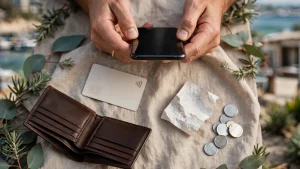
I have made that mistake in other contexts: I saw a recognisable payment logo and let it do too much of the convincing. A known name can make a transaction feel ordinary, while the destination and the terms still deserve scrutiny. The payment method and the business receiving the money are separate things. Don’t merge them.
So, is PayID safe for pokies? I can’t give a reliable yes-or-no answer about PayID use at a particular operator. I won’t claim that it is accepted, explain how it works for gambling deposits, or describe its protections without dependable details about that specific arrangement. The same goes for claims that it is safer than Bitcoin, faster than a bank transfer, or guaranteed to make a payment recoverable. A confident sentence is not the same as evidence.
That is not a reason to assume the opposite, either. “Not established as safe” does not mean “proven unsafe”. It means the sensible answer has to stop short of a verdict. If a site makes claims about PayID, read them as claims to be checked, not as independent confirmation. Pay attention to the exact recipient shown, the payment instructions and any conditions attached. If those details are vague or inconsistent, don’t fill the gaps with optimism.
It also helps to separate payment convenience from consumer protection. A payment route may be familiar to you and still leave unanswered questions about the operator receiving the money. In Australia, locally licensed online casinos cannot offer real-money pokies to residents; offshore operators are outside Australian consumer protection laws. A payment name does not change that legal position or create protections that do not otherwise apply. This is a different issue from whether a payment is technically processed.
Bitcoin information should stay in its lane. The mechanics of sending Bitcoin, the fees involved and the timing of a Bitcoin withdrawal cannot be transferred to PayID by analogy. Nor does a description of one payment method establish what another method’s transaction records show, how a payment can be challenged, or what happens when something goes wrong. Those are method-specific matters. Similar purpose, different facts.
When you see “PayID pokies” presented as a complete safety answer, pause over what is actually being promised. Does the wording describe only a way to pay, or does it imply that the whole gambling arrangement is protected? Those are not equivalent. A payment feature can’t, by itself, settle questions about account handling, disputes or the operator’s obligations. “Safe” is doing a lot of work there.
I’d rather leave a payment question open than turn a familiar label into a recommendation. If the details cannot support a clear explanation of the particular PayID arrangement, don’t rely on comparisons with Bitcoin or other methods to make the decision for you. And don’t send money simply because a payment option appears on a page. The site’s wording is not a guarantee.
This article is affiliate material and may contain sponsored links. That disclosure does not make a gambling service safer or amount to an endorsement. Real-money online casino games are prohibited services for people in Australia, and anyone under 18 must not gamble for money. No payment label changes either point.

What to check before trusting a site
I would not call an operator safe because its page looks polished or because a review gives it a glowing verdict. A specialist affiliate review recommends looking at reviews, licensing and the range of pokies. Those are useful things to examine, but they are checks, not proof that an operator will treat you fairly or pay without trouble.
Start with the reviews, and read past the headline score. Look for specific explanations of what the reviewer assessed, and whether the piece discloses affiliate links or sponsorship. If the praise is all broad claims and there is little detail about how the site works, I would not treat the rating as much evidence. I’ve made that mistake: a confident recommendation is easy to mistake for someone else having done the hard checking.
Then look at the licensing claim itself. The operators discussed for this market hold offshore licences, primarily from Curacao eGaming or the Anjouan Gaming Authority. Check which authority the site names and whether the operator’s claim is clear. Do not read an offshore licence as a promise of good service, or as Australian authorisation. A badge in a footer is a claim to inspect, not a safety certificate for your money.
The games list is another practical check, though it tells you something narrower. See whether the site describes its pokies clearly and offers a selection that suits what you are actually looking for. A long catalogue can look impressive; it does not establish that withdrawals will be handled well, that terms are fair, or that the operator is reliable. I keep those questions separate. Games are games.
- Read reviews past the headline score for specific details
- Verify the offshore licensing authority named
- Check that the games list and site details are consistent
- Review the disclosure of affiliate links or sponsorship
Pay attention to whether the details agree across the site. If the licence wording, review claims and descriptions of the available games are hard to reconcile, pause rather than filling in the gaps with assumptions. I would also avoid treating a reviewer’s list of recommended operators as a substitute for checking the individual claims yourself. That is where “trusted” can become a sales label.
None of these checks can turn an offshore operator into a risk-free choice. They can help you notice what is being claimed and how much support is offered for the claim; they cannot guarantee what will happen if you have a dispute. I’d rather leave a claim unaccepted than talk myself into believing it because I wanted the site to be legitimate. Not the same thing.
This page is affiliate material and may include sponsored links. That gives you another reason to distinguish an assessment from an endorsement: a link or favourable description is not proof of suitability. This information is for adults aged 18 and over, and is not an invitation to use an online casino.
Sending Bitcoin in and requesting it back
The mechanics are simple to describe, but that does not make them risk-free. For an adult aged 18 or over, a Bitcoin deposit starts with the address shown in the casino account. You copy that address, open your own wallet and send Bitcoin to it. The money moves from your wallet to the destination you entered; it is not a card payment that can be cancelled through a bank.

I would slow down at the copying step. Check that the address in your wallet matches the one supplied for the deposit before confirming the transfer. A small slip can matter. Bitcoin sent to an incorrect address is generally unrecoverable because blockchain transactions cannot be reversed. That is a brutal feature, not a customer-service problem you can count on someone fixing.
A withdrawal runs the other way, but it is still a request made through the casino account. Copy the receiving address from your own wallet, then paste it into the casino’s withdrawal form. The address needs to be yours and suitable for receiving Bitcoin. A withdrawal form asking for an address is not the same thing as a completed payment: you are giving the operator the destination for the transfer.
That distinction is easy to miss when you are focused on the amount on screen. I would check the pasted address against the one in my wallet before submitting, rather than trusting that a quick copy-and-paste has gone perfectly. No clever trick here. Just careful handling.
These steps describe the payment mechanics; they do not establish that an offshore operator is safe or that a withdrawal will be approved. Australian consumer protection laws do not apply to the offshore operators discussed, and this is not an offer or recommendation to use them. Any real-money gambling is for adults only.
Keep the two directions clear: for a deposit, the casino supplies the destination address and you send Bitcoin from your wallet; for a withdrawal request, you supply your wallet’s receiving address through the casino form. The address is the crucial piece in both cases. Check it before sending or submitting.
Bitcoin Transactions
-
1
Deposit
Copy the address shown in the casino account and send Bitcoin from your wallet to that specific destination.
-
2
Withdrawal Request
Copy the receiving address from your own wallet and paste it into the casino's withdrawal form.
-
3
Verification
Check the pasted address against your wallet one last time before submitting the request.
Verification can be the real withdrawal bottleneck
A withdrawal request can expose a problem that stayed hidden while you were registering: the operator has not finished checking who you are. I used to treat verification as paperwork I could deal with later. That was a poor assumption. If a check is still pending when you ask for a payout, it can become the thing holding everything up.
The process may unfold in stages. Registration checks can come first, followed by requests for identity and address documents. A further check may be triggered when you make your first withdrawal or when your cumulative deposits reach a threshold. The threshold varies by operator; the stated range is AUD 2,000–5,000. Don’t assume that passing registration means there will be no later request.
With Bitcoin, an operator may also ask you to show that you control the address used to deposit. A specialist review describes two possible ways to do that: signing a message from the deposit address, or supplying a wallet screenshot that shows the sending transaction. Those are examples of checks an operator might request, not a universal procedure. Read the instructions carefully before sending anything, and avoid sharing wallet information beyond what the operator specifically requests.
A specialist review also recommends completing the later verification stages before the first withdrawal, ideally within 24 hours of registration, to reduce a common source of payout delays. That is advice from a review, not a deadline that applies to every operator or a promise of prompt payment. Still, if you are an adult aged 18 or over and choose to proceed, sorting out the requested checks early may leave fewer identity questions waiting when you want your money.
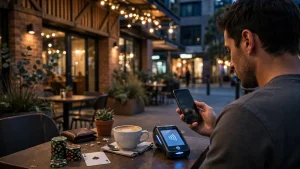
Keep copies of the documents and any messages you send, and check that names and details match across them. If a request is unclear, ask the operator to explain it before submitting more information. I learned that “quick check” can mean another round of back-and-forth. Not quick at all.
When a Bitcoin transfer goes wrong
A missing Bitcoin deposit can look like a lost payment, but there are several possible explanations. The operator may not have detected it yet, the amount sent may have been lower than required, or an address may have been reused in a way that complicates matching the transfer to your account. Those problems are different from sending funds to the wrong address, so don’t assume the money has vanished before you know which situation you’re dealing with.
If the destination address was incorrect, recovery is generally not possible. Bitcoin transactions are recorded on the blockchain and cannot simply be reversed by a bank or cancelled after the fact. The recipient would have to cooperate for funds to be returned; there is no routine chargeback route. That’s why an address mistake is more than a minor typo. I treat any request to send funds as a point to slow down, not a box to click through.
If a deposit does not appear, keep a record of the transaction and contact the operator through its stated support channel. Explain what happened plainly. Avoid making another transfer just to see whether it works: a second payment can leave you with two unresolved transactions rather than a solution. A delay in recognition may clear, but the operator needs to identify the payment before your account balance can reflect it.
A stuck withdrawal is a separate warning sign. Do not send additional money to “unlock” it, pay a release charge, or satisfy a new deposit demand. That demand is not proof that a payout is on its way. Preserve messages and transaction details, and don’t let pressure push you into risking more. I’d rather accept that I may not recover a disputed amount than throw good money after bad.
“Safe” is not a promise of recourse. Offshore operators are outside Australian consumer protection laws, so ordinary local protections do not apply if a dispute develops. This page is affiliate material and may contain sponsored links; that does not make an operator’s claims a guarantee. Anyone considering gambling must be at least 18, and should pause rather than chase a missing payment.
Security, privacy and the limits of “instant”
Bitcoin’s security is often described as a benefit of blockchain technology. That describes the network, not the honesty or reliability of an offshore operator. A transaction can be recorded securely while a casino account remains subject to the operator’s own approval process. I learned not to treat one as proof of the other.
Privacy claims need the same distinction. A specialist review describes Bitcoin as offering more anonymity than traditional payment methods, but that does not mean a player is unidentifiable or that an operator will skip checks. The operator may still ask for identity information or review a withdrawal. “Private” is not invisible.
Fees are another selling point that deserves careful wording. A specialist review characterises Bitcoin transaction fees as usually minuscule and lower than fees on conventional payment options. Miner fees vary over time, though, so there is no fixed cost to rely on. What matters is the fee shown for the transaction you are making, alongside any conditions the operator applies.
You may also see claims that Bitcoin deposits and withdrawals are “instant”. A specialist review says most Bitcoin withdrawals are completed within an hour, but that is not a promise for every request. Blockchain processing is only one part of the journey. The operator may still need to approve the withdrawal, and delays can come from an approval queue, incomplete KYC or processing batched during business hours.
That distinction matters more than a polished payment badge. The network may process a transfer quickly while the account-side request waits. I would read a speed claim as a description from a particular review, not a guarantee about what will happen to your money.
For Australian readers, these features do not make an offshore casino a safe or locally protected service. Australian consumer protection laws do not apply to the offshore operators discussed here. This page is affiliate material and may include sponsored links; that relationship is another reason to treat promotional claims with care. Real-money gambling is for adults aged 18 and over, but meeting that age requirement does not remove the risks or create consumer protection.
Fast network. Separate operator.
Free play is not the same as real-money play
Online pokies may offer a free-play mode or a real-money mode. The screen can look similar, but the stakes are different: free play uses no money wager, while real-money play involves deposits and the possibility of losing money. That distinction matters more than the graphics or the word “safe” on a page.
Free play can let you try a game without putting funds at risk. It is not proof that the operator is trustworthy, though, and it says nothing by itself about how real-money withdrawals or account disputes are handled. I’ve learned not to treat a low-risk first impression as evidence about what happens when money is involved. Different question entirely.
There is also an important Australian limit. The law prohibits locally licensed online casinos from offering real-money pokies to people in Australia. The offshore operators discussed on this page are not a route around that restriction, and Australian consumer protection laws do not apply to them. So a free version should not be read as an endorsement or as a signal that real-money play is authorised here.
If you encounter a free mode, keep its purpose narrow: it is a way to play without wagering money, not a safety certificate and not a promise that the paid version has the same conditions. If real-money play is involved, remember that Australian law prohibits operators from providing that service to people physically located in the country. Players must be at least 18 to play for real money, but meeting an age requirement does not change the legal position for operators.
I’d separate the two choices in my head rather than letting one stand in for the other. Free play means no real-money stake; real-money play brings financial risk and, in Australia, a prohibited service for operators to provide. A familiar game or a no-cost mode doesn’t erase that difference. Keep it clear.

Bonus terms can turn into disputes
A bonus can look like extra room to play, then become a disagreement over what counted. I’ve learned to treat the wagering contribution as a separate rule, not assume every game moves the bonus balance along in the same way.
The percentages can vary by game type. Table games may contribute 0%, while pokies may count at 100%. Some high-return pokies can be capped at 50%. Those figures can change what a player expects to happen to a bonus balance: a session that feels substantial may contribute less than expected if the game has a lower contribution rate or a cap.
That is where vague wording becomes a problem. If the terms do not make clear which games qualify and how much each contributes, it is easy for the player and operator to read the same bonus differently. “All games count” is not the same as all games counting equally. Read the contribution table and the definitions around it before accepting an offer; if the rule is hard to find or unclear, do not treat the headline as the whole deal.
There is another condition worth checking: the maximum bet allowed while bonus play is active. Going over that limit may void the bonus play. A player can think they are simply changing their stake, then discover the operator treats the bet as a breach of the bonus rules. That can turn an ordinary play decision into a dispute about whether the bonus and related winnings remain eligible.
I would keep a copy of the terms shown when the offer is accepted, along with any relevant account messages. If a disagreement comes up, point to the exact contribution rule or bet condition rather than relying on what the promotional wording seemed to promise. That does not guarantee the operator will agree, but it keeps the issue specific.
For anyone aged 18 or over considering real-money play, the practical point is plain: a bonus is conditional, not cash with no strings. “Extra value” can mean extra rules. Read them first.
What happens when something goes wrong at PayID pokies sites in Australia?
You may have limited recourse: Australian consumer protection laws do not apply to the offshore operators discussed, and a foreign licence does not provide the same protections as a local one.
Is verification required?
Yes, verification may be required, often at your first withdrawal or once your cumulative deposits reach AUD 2,000–5,000. Crypto checks may include signing a message from your deposit address or showing the wallet transaction.
Are Bitcoin casinos legit?
The operators discussed hold offshore licences, primarily from Curacao eGaming or the Anjouan Gaming Authority, but they are not locally licensed Australian casinos. Australian consumer protection laws do not apply to them.