
Check the route before making a payment
Deposits, withdrawals, fees and account checks can differ by method, and a convenient deposit option may not offer a usable cashout route.
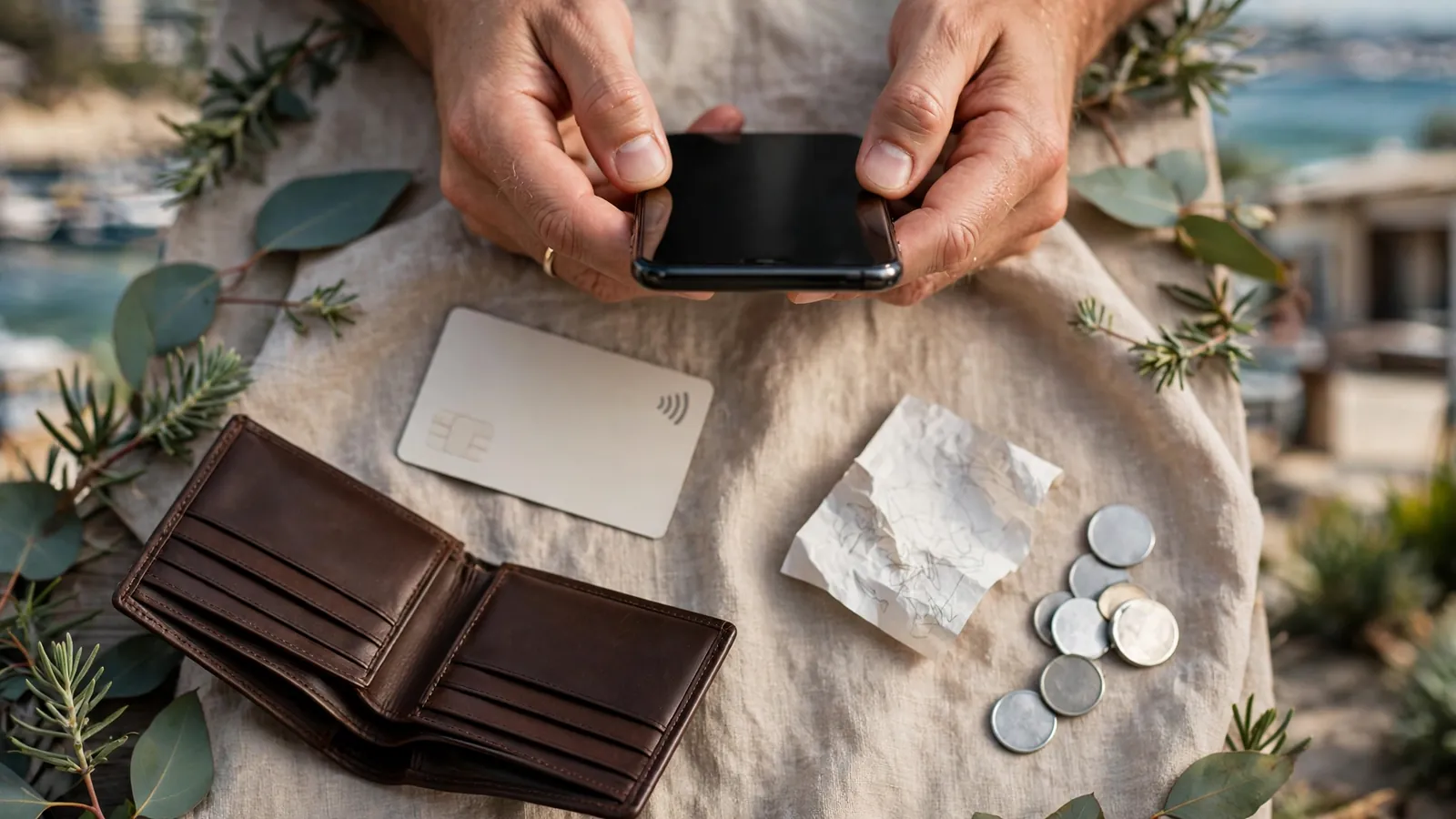
The Payment Choice Is Only Half the Story
A payment logo can make a service look familiar. It doesn’t tell you whether the route is lawful in Australia, whether it can be used to withdraw money, or what happens after you press the button. I’ve learned not to treat the first screen as the whole deal.
There’s an important boundary before comparing any online casino payment options: under the Interactive Gambling Act 2001, operators cannot legally provide real-money online casino games to people in Australia. That includes pokies, poker and table games. So a list of payment methods is not an endorsement or a recommendation to use an offshore casino. There is no Australian licence that makes providing those services lawful.
For a broad map of the methods discussed in specialist payment reviews, the categories include bank transfers, e-wallets, prepaid vouchers and cryptocurrency. They are not interchangeable, and naming a category doesn’t mean a particular service is available, suitable or lawful for a transaction. Nor does it mean every method should be used to fund gambling: credit cards and cryptocurrency are not deposit recommendations here.
Top operators
Choosing a casino payment method means weighing deposit requirements against how quickly you may be able to withdraw. Use these details to check which options fit your budget and payment preferences.
-
Ricky Casino
- Payout speed
- crypto under 1 hour, PayID 1-3 business days
- Min. deposit
- A$20 (A$30 to qualify for the bonus)
You can start with a A$20 deposit, though A$30 is required to qualify for the bonus. Crypto payouts are listed as taking under an hour, while PayID payouts take 1–3 business days.
-
SkyCrown
- License
- Tobique Gaming Commission
- Payout speed
- crypto ~10-15 minutes, fiat 1-5 days
- Min. deposit
- A$30
You can deposit from A$30. The listed payout times are around 10–15 minutes for crypto and 1–5 days for fiat; the stated licence is from the Tobique Gaming Commission.
-
LevelUp Casino
- License
- Curacao eGaming OGL/2023/174/0082 (Dama N.V.)
- Min. deposit
- A$15
You can deposit from A$15. Its stated licence is Curacao eGaming OGL/2023/174/0082, held by Dama N.V.
-
JustCasino
- License
- Curacao Gaming Control Board
Its stated licence is from the Curacao Gaming Control Board. No payment limits or payout times are provided here, so check those details before choosing a method.
-
House of Pokies
- License
- international iGaming licence – jurisdiction not named in the source
- Payout speed
- PayID 1-24 hours
- Min. deposit
- A$30 (PayID from A$10)
PayID payouts are listed at 1–24 hours, and the minimum deposit is A$30, or A$10 when using PayID. The source describes its licence as an international iGaming licence but does not name the jurisdiction.
-
WinSpirit Casino
- License
- Curacao eGaming OGL/2024/923/0383 (Antillephone N.V.)
- Min. deposit
- A$30
You can deposit from A$30. Its stated licence is Curacao eGaming OGL/2024/923/0383, held by Antillephone N.V.
-
Bizzo Casino
- License
- Curacao Gaming Control Board (TechSolutions Group N.V.)
Its stated licence is from the Curacao Gaming Control Board, with TechSolutions Group N.V. named. No payment limits or payout times are provided here.
-
Kingmaker
- Payout speed
- crypto ~90 minutes, fiat 1-5 days
- Min. deposit
- A$30
You can deposit from A$30. Crypto payouts are listed at around 90 minutes, while fiat payouts take 1–5 days.
-
Wild Tokyo
- License
- Curacao
- Payout speed
- crypto 30-60 minutes, fiat 1-5 days
- Min. deposit
- A$10
You can deposit from A$10. Listed payout times are 30–60 minutes for crypto and 1–5 days for fiat; its stated licence is from Curacao.
-
LuckyVibe
- License
- Curacao Gaming Control Board OGL/2023/176/0095 (Hollycorn N.V.)
Its stated licence is Curacao Gaming Control Board OGL/2023/176/0095, held by Hollycorn N.V. No payment limits or payout times are provided here.
The practical distinction that catches people out is the direction of the money. A payment route shown for adding funds does not establish that the same route is available for receiving a withdrawal. A specialist payment review notes that deposit and withdrawal methods can differ; treat that as a reason to check the actual terms for a service, not as a guarantee about what any operator offers. Deposit access is only half the story.
Bank transfers connect money to a bank account, while e-wallets sit between a bank or other funding source and a merchant. Prepaid vouchers are bounded by the value loaded onto them. Cryptocurrency is a separate digital-asset category, with its own risks; blockchain transactions are irreversible and do not come with a chargeback option. These descriptions explain the categories, not a path for funding an online casino.
The Australian context matters, too. A payment method being familiar at home does not make an offshore gambling service compliant with Australian law. PayID, for instance, is linked to an Australian bank account through the New Payments Platform, but an available payment button says nothing by itself about the legality of the underlying service. Specific local payment flows deserve their own scrutiny.
I also wouldn’t assume that a method mentioned in a general guide will appear on every payment screen. Availability can depend on the operator, the account and the transaction type, and service offerings can change. Search terms such as Revolut or Volt don’t prove that either is a usable or permitted route for a particular transaction. Check the service’s current terms rather than relying on a broad label.

And “phone payment” can mean several different things: a wallet opened on a handset, a bank-linked transfer, or a voucher code entered on a small screen. The device doesn’t settle whether the method can receive withdrawals or whether the service itself may lawfully offer casino gambling in Australia. Convenient interface, separate questions.
My own mistake used to be treating the deposit button as the answer. It wasn’t. Before considering any payment route, establish whether the service is legally permitted to offer what it is selling in Australia, and don’t mistake offshore access for Australian approval. Then consider the route’s limits and risks without assuming a deposit method doubles as a cashout method.
That’s the broad map. The method name is only a start.
Deposits, Cashouts and the Checks in Between
A payment option on a funding screen tells you only that the service is offering a way to send money in. It does not establish that the same route can return money to you. A specialist review notes that casinos may offer different methods for deposits and withdrawals; treat that as a detail to verify, not a promise that applies everywhere.
There is a more basic issue for Australians: under the Interactive Gambling Act 2001, operators cannot legally provide real-money online casino games to people in Australia. That includes pokies and table games. A payment screen does not change the legal status of the service, and a foreign licence does not make it locally authorised. I would not treat an offshore casino account as a safe place to leave money.
If you are looking at a service that solicits Australian customers, follow the transaction from start to finish before sending funds. Read the withdrawal terms, not just the deposit instructions. Check whether the listed cashout route is available to you, whether it has conditions attached, and whether the operator says it must return funds through the original payment channel. The answer can affect what evidence you need to keep and whether you can access a payout at all.
Keep the payment trail clear
Verification can be part of the process before a withdrawal is handled. A specialist review describes possible requests for government-issued identification, proof of address dated within three months, and evidence that you control or used the payment method. That might mean providing a statement or another record connected to the transaction. Requirements can depend on the operator and the circumstances, so do not assume that a successful deposit means your account is fully verified.
I learned the hard way that a payment receipt is not the same as a complete record. Keep confirmations and account messages together, and make sure the name and details you submit are consistent with your documents. If a request arrives, read what it asks for and use the service’s stated secure process; do not send extra financial or identity details through an unverified message.
A deposit can go through while a later withdrawal is held for checks. That is why I would not count an account balance as money I can readily retrieve. A promotion can add another layer: no-deposit offers may still carry wagering, verification and withdrawal conditions. “Free” is a sales word, not a description of what you can withdraw.

For any payment service, there is also a difference between the operator’s review of your account and the movement of money through the payment provider. A status marked as approved does not necessarily mean the funds have arrived. Keep the transaction reference and check the destination details before assuming a transfer is complete.
Stop if the route is unclear
Before any payment, confirm the withdrawal route and its conditions. If the operator will not explain how withdrawals work, or asks for documents through a channel you cannot verify, do not proceed. And if a digital-currency transfer is involved, remember that blockchain payments are irreversible and have no chargeback option.
These checks do not make an offshore casino lawful in Australia or guarantee that funds are protected. They are a way to recognise unresolved risks before money leaves your account. I would rather abandon a confusing payment flow than discover its limits after paying in.
PayID and BPAY in the Australian Context
PayID is a bank-linked payment system, not a separate account where money sits. It lets a mobile number, email address or ABN act as an identifier for an Australian bank account through the New Payments Platform. Every major Australian bank supports PayID, but that does not mean every service displaying it is available to Australian customers or that the payment is lawful in every context.
That distinction matters here. Under the Interactive Gambling Act 2001, it is illegal for operators to provide real-money online casino games, including pokies, poker and table games, to people physically located in Australia. A payment logo cannot change that. I would not treat a familiar bank transfer option as evidence that a gambling service is authorised to operate here.
Availability also depends on the operator. A specialist review reports that some casino payment pages offer PayID for deposits, while withdrawal support needs to be checked separately. Treat that as a description of what the review encountered, not a promise about any service you may find. Payment options can change, and seeing PayID on a deposit screen tells you nothing by itself about whether money can be returned by the same route.
Before making any payment, verify the operator’s legal status for Australia and establish the withdrawal route independently. Do not assume an overseas licence makes an online casino lawful to provide to people in Australia. If you cannot confirm that a service is legally authorised here, the safe choice is not to fund it. I learned the hard way that a familiar payment method can make a questionable setup feel more ordinary than it is. It doesn’t make it right.
BPAY is another bank-linked option, but it is not the same sort of fit for a transaction intended to appear straight away. A specialist review describes BPAY as a slower fallback where PayID is unavailable and says payments take one to two business days. That timing is not a guarantee for every payment or service; check the terms shown by the relevant bank and payment provider.

The delay changes what BPAY is useful for. A specialist review characterises it as rarely used for real-time gameplay, which makes sense if funds have to travel through a bill-payment process rather than appear promptly. If an operator presents BPAY as an alternative, read the payment instructions carefully and do not assume the transfer will be credited while you wait on the page. A pending payment is still money committed.
The practical comparison is straightforward: PayID connects a bank account through a simple identifier, while BPAY can be a slower backup. Neither tells you whether a service is legally available in Australia, and neither guarantees a matching cashout route. The payment screen is only one part of the picture. Slow down. Check first.
I would also be wary of treating “Australian bank-linked” as a synonym for “safe” or “approved”. The familiar names and local account details can make a service look reassuring, but the relevant question is whether the operator is legally permitted to provide real-money casino games to people here. Australian law prohibits that provision; a payment method does not create an exception.
So, if you are comparing Australian casino payment methods, keep the comparison at the level of how the rails work, not as a recommendation to use them for online casino gambling. PayID’s bank connection and BPAY’s bill-payment structure are different, but both require careful scrutiny of the destination and the terms. Check legal status and withdrawal availability before any deposit—and if either cannot be established, stop there.
Do
- Verify the operator's legal status for Australia
- Establish the withdrawal route independently
- Check withdrawal availability before depositing
Don't
- Assume a familiar payment method means the service is authorised
- Mistake a deposit logo for a guaranteed cashout route
- Assume an overseas licence makes the service lawful in Australia
What Happens Between the Payment Screen and the Account
A payment screen can make a transaction look like one clean step: enter details, press confirm, see a balance change. In practice, a payment gateway sits between the checkout page and the payment provider. It passes the request along and returns a status. That status might show that the instruction was accepted, declined or is still pending; it does not necessarily mean the funds are already available in the account.
I used to treat “processing” as a promise that the money was on its way and nearly there. It isn’t. The label describes a stage, not a delivery time. The payment provider may have responded while the operator’s system is still waiting to update the account, or a transfer may be waiting for a person to handle it. A refreshed screen can show a different status later. Annoying, but not automatically a failed payment.
Bank transfers are a good example of why the screen and the account can feel out of sync. A specialist review reports that some casino bank transfers are handled manually once or twice a week. In that account, a withdrawal requested on Friday could arrive by Wednesday. That is a reported processing pattern, not a timetable to rely on everywhere. The important distinction is that a transfer can be delayed before it even reaches the ordinary bank-to-bank leg of the journey.
If a transaction is pending, sending the same amount again can create a second payment rather than speed up the first. I learned to check the status and keep the transaction reference before doing anything else. If the payment has been debited but the account has not changed, those details help when asking the payment provider or service for an update. If it was declined, repeating the same attempt without understanding why may simply produce another decline.

There can also be a pause while an account or payment is reviewed. That is separate from the time a bank or payment service takes to move funds. A completed review does not itself prove that a transfer has arrived, and a bank’s record of a debit does not necessarily mean the receiving account has been credited. Separate stages. Separate clocks.
This is why I don’t read a polished checkout screen as evidence that the whole route is automatic. Payment technology can pass information quickly while the actual handling takes longer. Before acting on a pending status, check whether the transaction is still open, whether the funds have left your account, and what reference the service has recorded. Avoid sharing sensitive account details in an ordinary message.
One legal point matters here: Australian law prohibits operators from providing real-money online casino services to people in Australia. Describing payment processing does not make those services lawful or recommend using them. The interface is only the visible part. The less visible handling is where the wait can happen.
SMS-Style Payments, Vouchers and Their Limits
Payment labels can make a checkout screen look simpler than the transaction really is. “SMS payment” suggests a charge handled through a phone, while voucher options may look like a way to keep spending separate from a bank account. But a label alone tells you little about what the payment can do after money has been added.
A prepaid voucher has a firm boundary: it can only cover spending up to the value loaded onto it. That can make the outlay easier to see in advance. It also means there is no extra balance available once the loaded value has been used. I’d treat that as a spending cap, not as a promise that the rest of the payment arrangement is straightforward.
The catch comes when money needs to go in the other direction. A voucher deposit generally cannot be returned to the voucher as a withdrawal. So a person who has funded an account that way may need a separate cashout route. That detail matters before any payment is made; finding it out only when trying to withdraw is a lousy surprise.
A payment system and a voucher are not interchangeable ideas. A system may describe how a payment request is handled, while the voucher itself is a prepaid instrument with a set loaded value. Terms such as SMS payment, CashtoCode or eCheck may appear in searches or on payment screens, but the name does not establish whether a service is available, what conditions apply, or whether it can receive a withdrawal. Don’t infer those details from the label.
There is also a legal point that should not be buried under checkout language. Under Australia’s Interactive Gambling Act 2001, operators cannot provide real-money online casino games, including pokies, to people in Australia. A payment method being mentioned somewhere does not make the underlying service lawful or suitable for Australians. I wouldn’t read a polished payment screen as evidence otherwise.
For any lawful purchase involving a prepaid voucher, the useful questions are plain: what value is loaded, where can it be spent, and what happens if a refund is due? In the context of a casino payment system, the separate withdrawal issue is especially important: a voucher may be usable to fund a transaction without being usable to return funds. A payment route that only works one way is not a complete route for handling money.
I’ve learned not to let a tidy checkout screen do the thinking for me. A voucher’s cap can help keep spending bounded, but it does not solve the cashout problem. Keep those two things separate in your head. Small distinction. Big headache.
Check the Cashout Route Before You Deposit
A payment portal can make the first step look simple: choose a method, enter an amount and see a confirmation. That screen tells you about funding, not necessarily about getting money back. A specialist review notes that casino payment options can differ between deposits and withdrawals, so seeing a method on the deposit page is not proof it is available for cashouts.
I’ve learned not to treat a familiar logo as the whole answer. A casino payment platform might accept one route for incoming funds and show a different set of options when a withdrawal is requested. The practical question is not just “Can I pay this way?” It is “What route would the operator allow for a withdrawal, and is that route available to me?” Check the written payment terms and the withdrawal page, rather than relying on a promotional banner or an old screenshot.
- Check the written payment terms for cashout rules
- Review the specific withdrawal page for available methods
- Confirm if the operator requires funds to return via the original channel
- Verify the legal status of the service in Australia
PayID is a clear example of why the two sides need separate checks. A specialist review reports that availability for deposits depends on the operator, and that withdrawal support needs to be checked independently. So an online casino payment option labelled PayID should not be taken as evidence that PayID will also be offered for cashing out. Look for a specific answer in the operator’s current terms or ask support before taking any action. Keep a copy of the response.
The same principle applies when comparing a payment portal with a particular method. PayPal, POLi, Boku or Neosurf appearing in a list does not, by itself, establish that the route is available for withdrawals. Nor does a method being described as popular tell you what happens when you want to leave. A list of logos is not a cashout plan.
There is an important Australian context here: under the Interactive Gambling Act 2001, it is illegal for operators to provide real-money online casino games to people physically located in Australia. Offshore casino services are not made lawful by offering an Australian-facing payment option. This is not a recommendation to use such a service; it is a reason to treat payment claims with particular care and not mistake access to a portal for legal approval or consumer protection.
If you are assessing a payment claim, establish what the withdrawal route is before any funds are sent, and whether the operator’s terms actually permit it. Don’t infer an answer from the deposit page. If the cashout method is unclear, inconsistent across pages or only promised in chat, that uncertainty matters.
I used to focus on the first screen because it was the part designed to feel easy. That was backwards. A payment method is only a complete route when you understand both directions—and in Australia, the legal status of the service comes before either one.
Check both ends. No assumptions.
Provider Fees and the Cost of Getting Money Out
A payment button can look free while the route behind it costs you time or a slice of the amount you receive. I’d compare the cashout charge and delivery estimate, not just how quickly the balance appears after a deposit. Those are separate parts of the cost.
A specialist review describes MuchBetter withdrawals as quicker than bank-transfer cashouts, which it says can take as long as five days. That comparison may matter if access to the money is your priority, but it is not a promise about any particular operator or transaction. The operator’s terms and the payment service’s own charges still need checking.
Skrill has a different trade-off. A specialist review puts a Skrill withdrawal to a bank at one to two days, while reporting that some casinos apply a transaction fee of one to three per cent. That fee can be easy to miss when you focus on the wallet interface. Check whether the charge comes from the casino, Skrill, or both, and whether it is taken from the amount sent or added separately. Small print matters.
There is also a reported Neteller charge of 1.45% for credit-card funding, according to a specialist review. That figure is a provider charge, not a reason to fund gambling with a credit card: credit-card payments should not be used for online gambling. I would not treat a fee comparison as permission to use a route that is unsuitable or blocked.
MuchBetter
Withdrawals are reported as quicker than bank transfers.
Skrill
Bank withdrawals take one to two days, with some casinos applying a 1-3% fee.
Neteller
Reports indicate a 1.45% charge for credit-card funding.
The useful comparison is therefore not simply “wallet versus bank.” It is the combination of withdrawal timing, the casino’s fee, and any charge imposed by the provider. A quick wallet transfer can still cost more than expected; a bank route can take longer without necessarily having the same fee structure. And the figures reported by reviews are not a substitute for checking the terms that apply to the specific service you are considering.
I’ve made the mistake of judging a payment option by its first screen. The cashout side is where the actual cost can show up. Read the fee schedule before relying on a route, and keep the quoted timing and charges in writing so you can compare them with the transaction record later. No surprises.
“Instant” Is Not the Same as a Usable Payment Route
“Instant” sounds reassuring on a payment screen, but it only describes one part of a transaction. A specialist review may describe Visa or Mastercard deposits as instant: if a transaction is accepted, the account balance can update without waiting for a bank transfer to clear. That does not mean the route will work for someone in Australia.
Australian financial institutions block many standard Visa and Mastercard transactions to offshore casinos. So a fast payment method can still fail at the first step. I’ve learned not to treat a logo or an “instant payment” label as proof that the checkout will accept a payment from an Australian account. The screen can promise speed; your bank still has a say.
And there is a more important point than speed. Australian law prohibits operators from providing real-money online casino games to people physically in Australia. A payment label does not change that. I can’t recommend using a card, or another route, to fund an offshore casino account.
If you’re assessing a payment integration for another lawful purpose, check what “instant” refers to: authorisation, the merchant’s account credit, or the point at which funds are actually usable. Those are not necessarily the same moment. A pending transaction is not a completed one, and a declined payment is not made workable by trying the same details repeatedly.
The same caution applies to searches for Neteller, MiFinity or other named methods. Seeing a method discussed online does not establish that it is available to you, permitted for your intended use, or supported at both ends of a transaction. Don’t infer availability from a brand name on a page.
“Fast” is not “available.” Before entering payment details anywhere, pause over what the service is and whether it can lawfully be offered where you are. In Australia, real-money online casino services are prohibited for operators to provide. A quick deposit claim is no workaround for that, and a card that might process quickly elsewhere is not an acceptable casino deposit option here.
I used to read the speed badge first. Wrong priority.
Payment Apps: Deposit Convenience, Withdrawal Reality
A payment app can make the first part of a transaction feel almost invisible. That does not mean it can handle a withdrawal, or that the service behind the payment page is lawful. In Australia, the Interactive Gambling Act 2001 prohibits operators from providing real-money online casino games to people here. A polished app button does not change that.
Apple Pay specifics
Deposits are made through the phone's digital wallet using biometric authentication to reduce checkout steps. However, it is not a method for receiving casino withdrawals.
Apple Pay is a clear example of why the two ends need to be considered separately. A specialist review describes deposits being made through the phone’s digital wallet, with biometric authentication confirming the payment. That can reduce the steps at checkout. It should not be treated as a cashout route: Apple Pay is not a method for receiving casino withdrawals.
I’ve learned not to confuse “one tap” with “sorted”. The payment interface only tells you how money might be sent; it does not establish whether money can be returned through the same channel, or whether the service is permitted in Australia. If a page presents Apple Pay as a complete solution, read that claim narrowly. Deposit function only.
PayPal is different. It has barred gambling transactions in Australia since 2021, so an Australian user should not expect it to provide a route for casino payments. A logo on a page is not proof that a transaction will be accepted. Nor should you try to work around a restriction by misdescribing a payment.
Other app names can appear in payment menus, but a familiar brand is not enough to establish that it supports both deposits and withdrawals. Availability can depend on the service and the operator, and payment options can change. Don’t infer a cashout route from a deposit icon.
There is also a legal point that a slick checkout can distract from: real-money online casino services are prohibited for operators providing them to people physically in Australia. So this is not a recommendation to use an app to fund play. If you come across such a payment screen, treat convenience claims with care and do not take them as evidence of legality or withdrawal access.
Short version: phone authentication may simplify a payment step; it does not make an app a withdrawal method, override PayPal’s Australian restriction, or make an unlawful service lawful.

Paying on a Phone Without Losing Track of the Limits
A phone makes it easy to tap through a payment screen, but it does not make a voucher behave like a bank account. If you pay via a prepaid voucher, the amount available to spend is bounded by what was loaded onto it. That boundary is useful for keeping a payment finite, provided you keep the voucher’s value in view and don’t mistake a quick mobile checkout for an open-ended payment route.
The important catch comes later. A voucher deposit generally cannot be sent back to the voucher as a withdrawal. If you have a plan for receiving money, it needs to involve a separate cashout method; the voucher itself is not that plan. I would not treat “paid successfully” as meaning “the whole transaction is sorted.” Two different jobs. Two different routes.
On a small screen, it is tempting to focus on the button in front of you: select the voucher, enter its details, confirm. Before doing that, pause and establish what happens if you need to withdraw. Read the payment terms carefully, and make sure you understand which method could receive a payout. If you cannot identify a suitable route, don’t proceed on the assumption that the deposit method will double as one.
There is also a bigger Australian context that a payment screen cannot settle. The Interactive Gambling Act 2001 prohibits operators from providing real-money online casino-style services to people in Australia. A payment option appearing on a mobile page does not make that service lawful or establish that a payout is available.
My rule is plain: treat a voucher as a capped way to spend, not as a wallet with money moving both ways. Keep the loaded value clear in your mind, and decide on the separate withdrawal route before paying. A phone can make the first step feel effortless. It cannot erase the limit—or solve the cashout question.
Do Australian online casinos charge fees for deposits or withdrawals?
Yes, fees can apply: bank transfers may cost $5–$15, and some Skrill withdrawals carry a 1–3% fee. Crypto withdrawals are usually free, but converting AUD to EUR can cost 2–4%.
Which crypto is the fastest for withdrawals?
Litecoin is the fastest listed: withdrawals take about 10–30 minutes. Bitcoin can take up to an hour when the network is congested.
Why would I bother with muchbetter casinos instead of a normal bank transfer?
MuchBetter withdrawals are faster than traditional bank transfers, which can take up to five days. Bank transfers may also be processed manually only once or twice a week.
Are cryptocurrency casinos safe for Australian players?
You should not assume they are safe: cryptocurrency transactions are irreversible and have no chargeback option. Also, operators cannot legally provide real-money online casino games to people in Australia.
What happens if I play at an unlicensed offshore casino?
An offshore licence does not authorise an operator to provide real-money online casino games to Australians. You should not treat offshore access as Australian approval or assume your money is safe there.
How quickly does my money actually appear after I hit deposit?
Visa and Mastercard deposits are instant. BPAY payments take one to two business days.