
Check the game before you trust the label
The Mines name can describe a game concept, a specific title or a casino page, so each result needs separate checks.
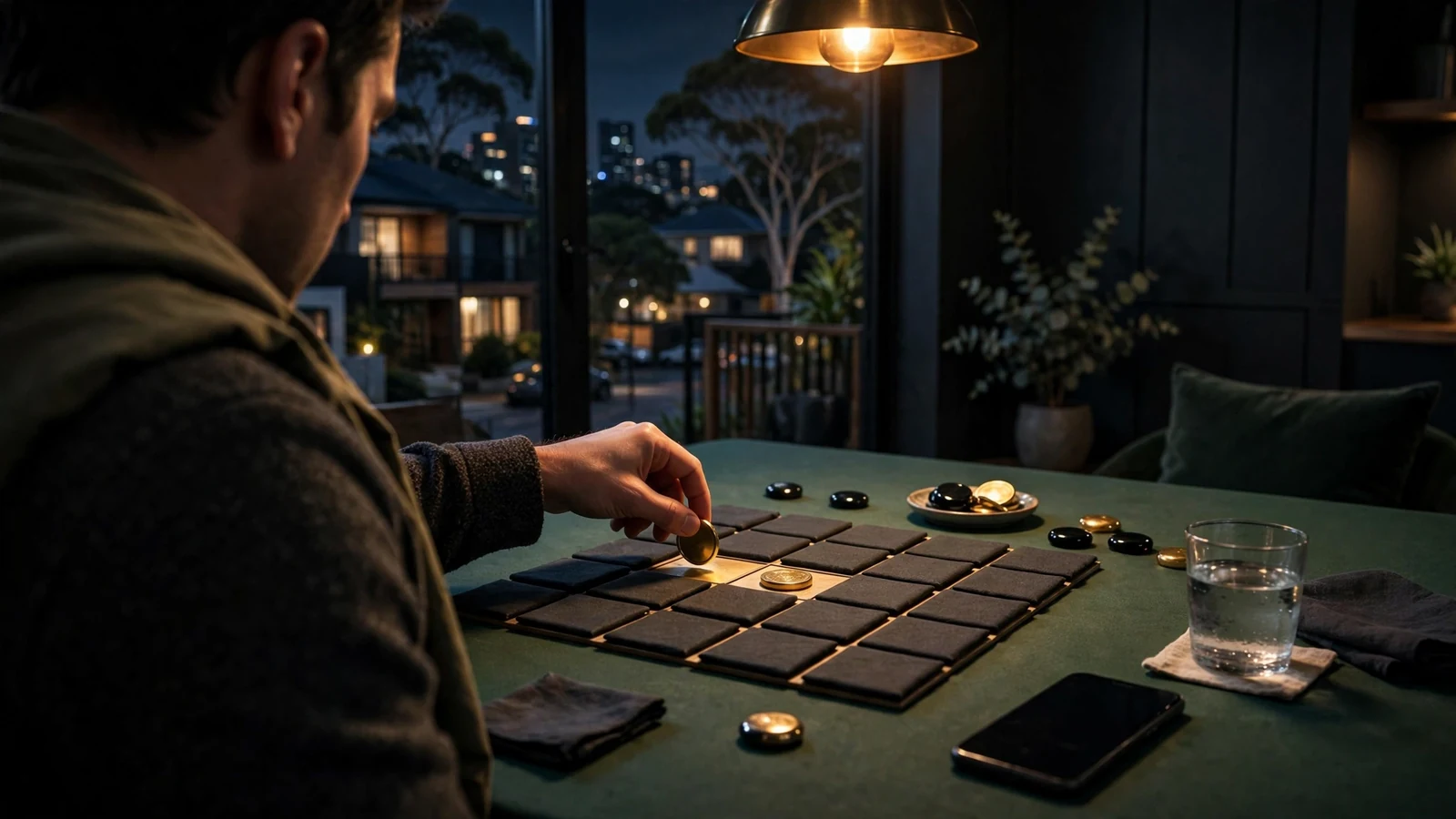
The Game Behind the “Mines” Search
“Mines” is a label that can point to a game concept, a particular title, or a casino page using the word in its name. Those are not interchangeable. I’ve learned to be wary of assuming that two games with the same label share a developer, rules or presentation. A name alone is a thin clue.
The basic idea most people have in mind is a grid with hidden danger: make selections, hope they are safe, and decide when to stop. That description gives you the shape of the game, not the identity of a specific product. The details can vary. One version may be built around a simple grid; another may use a different layout or add its own interface and rule choices. The word “Mines” does not settle any of that.
It also does not tell you whether you are looking at a standalone game or a result inside a casino’s wider catalogue. Search results can put these side by side, making them look like different doors into one product. They may not be. A casino page, a software provider’s title and a generic game description are separate things, even when they use similar wording. I’d want the exact title and provider before treating a result as a specific game.
That distinction matters when reading a review, too. A review of one Mines-style game cannot automatically speak for every other game with a similar name. Rules, presentation and the underlying product may differ. If a review does not identify the title it is discussing, or blurs the casino brand with the game itself, I would treat its conclusions cautiously. The label is not enough to establish what was tested.
The same goes for pages that appear to offer a login, an app or a casino account. Those phrases may describe a general site feature rather than anything unique to a Mines game. They do not confirm that a particular title exists in a particular version, or that its rules match another game carrying the same name. I used to read a familiar label as a shortcut. It isn’t one.

Provider information is a more useful clue, provided it is attached to the exact title rather than inferred from a casino’s overall catalogue. KA Gaming is one provider associated with casino games, but a general reference to its games does not establish that a particular Mines title comes from it. Its slot RTP percentages typically fall within a range of 94% to 96%. That figure is about KA Gaming slots as a group; it should not be assigned to a Mines game unless the exact title’s information supports that connection. Similar names are not evidence.
RTP is also easy to misread. It is a game statistic, not a description of what an individual person should expect from a short session. And a provider-wide range does not identify the RTP of every title from that provider. If a page presents one percentage as though it applies to every game under a broad label, check what game and calculation the figure actually refers to. Details matter. The headline can wait.

When I try to work out what a listing is describing, I separate three names in my head: the game title, the provider and the casino brand. Sometimes a page makes those easy to distinguish; sometimes it piles them together. If only the casino name is clear, I still may not know which Mines game is meant. If only the word “Mines” appears, I know even less. That is not nit-picking. It is the difference between checking a product and guessing from a label.
So, if you come across a Mines-style game, start with its full title and stated provider, then look for rules and game information tied to that same title. Don’t transfer details from a similarly named game, a general provider page or a casino’s wider catalogue. I’ve made that shortcut before. It saves a moment and leaves you with the wrong answer.
“Mines” tells you the theme or format someone is referring to. On its own, it does not tell you which game is involved, who made it, or whether a statistic belongs to that title. That’s the useful starting point. No magic label.
Mines Casino: The Australian Legal Context
Top operators
Choosing a Mines casino game involves more than the game itself: payment options, withdrawal timing and licensing details can help you assess where to play. Use these operator notes as a factual starting point for your 2026 search.
-
Ricky Casino
- Payout speed
- crypto under 1 hour, PayID 1-3 business days
- Min. deposit
- A$20 (A$30 to qualify for the bonus)
Ricky Casino lists crypto payouts in under an hour and PayID payouts in 1–3 business days. The minimum deposit is A$20, or A$30 to qualify for the bonus.
-
SkyCrown
- License
- Tobique Gaming Commission
- Payout speed
- crypto ~10-15 minutes, fiat 1-5 days
- Min. deposit
- A$30
SkyCrown lists a Tobique Gaming Commission licence, with crypto payouts taking around 10–15 minutes and fiat payouts 1–5 days. Its minimum deposit is A$30.
-
LevelUp Casino
- License
- Curacao eGaming OGL/2023/174/0082 (Dama N.V.)
- Min. deposit
- A$15
LevelUp Casino lists a Curacao eGaming licence, OGL/2023/174/0082, held by Dama N.V. Its minimum deposit is A$15.
-
JustCasino
- License
- Curacao Gaming Control Board
JustCasino lists a Curacao Gaming Control Board licence. That licensing detail is the available point of reference for this operator.
-
House of Pokies
- License
- international iGaming licence – jurisdiction not named in the source
- Payout speed
- PayID 1-24 hours
- Min. deposit
- A$30 (PayID from A$10)
House of Pokies lists an international iGaming licence, though the jurisdiction is not named. PayID payouts are listed at 1–24 hours; the minimum deposit is A$30, or A$10 when using PayID.
-
WinSpirit Casino
- License
- Curacao eGaming OGL/2024/923/0383 (Antillephone N.V.)
- Min. deposit
- A$30
WinSpirit Casino lists a Curacao eGaming licence, OGL/2024/923/0383, held by Antillephone N.V. Its minimum deposit is A$30.
-
Bizzo Casino
- License
- Curacao Gaming Control Board (TechSolutions Group N.V.)
Bizzo Casino lists a Curacao Gaming Control Board licence associated with TechSolutions Group N.V. This licensing detail is the available reference point.
-
Kingmaker
- Payout speed
- crypto ~90 minutes, fiat 1-5 days
- Min. deposit
- A$30
Kingmaker lists crypto payouts at around 90 minutes and fiat payouts in 1–5 days. Its minimum deposit is A$30.
-
Wild Tokyo
- License
- Curacao
- Payout speed
- crypto 30-60 minutes, fiat 1-5 days
- Min. deposit
- A$10
Wild Tokyo lists a Curacao licence, with crypto payouts taking 30–60 minutes and fiat payouts 1–5 days. Its minimum deposit is A$10.
-
LuckyVibe
- License
- Curacao Gaming Control Board OGL/2023/176/0095 (Hollycorn N.V.)
LuckyVibe lists a Curacao Gaming Control Board licence, OGL/2023/176/0095, held by Hollycorn N.V. This licensing information is the available point of reference.
When I first saw “Mines” described as a casino game, I treated the label as if it answered the important question: whether it was available to play here. It doesn’t. A game’s name, design or offshore website does not change the Australian rules for providing online casino services.
The central law is the Interactive Gambling Act 2001. It restricts operators from offering online casino services to people in Australia. That includes casino-style games made available for real money, rather than just one particular title or format. So a Mines game presented as an online casino product sits within a broader legal framework; the word “Mines” does not create a special exception.
That distinction matters because people often talk about “legal” as though it describes both sides of a transaction in the same way. Here, the law’s main restriction is on the provider: an operator cannot lawfully offer prohibited online casino services to people in Australia. That is different from saying that an Australian player is criminalised simply for using an offshore site. Players are not criminalised for that use.
It is a narrow but important distinction. It does not turn an offshore casino into an approved Australian service, and it does not mean the offer itself is lawful. Nor should “players are not criminalised” be read as a recommendation or a guarantee about what happens in every dispute with an offshore business. It describes the player’s position under this legal framework, not the quality, reliability or protection offered by a website.
I have seen the word “licensed” used as if it settles everything. It doesn’t. Offshore online casinos may operate under licences issued elsewhere, and some accept Australian payments. Neither fact amounts to Australian authorisation to provide online casino games to people here. A payment method is not a legal ruling, and a foreign licence is not a local one.
That is where the wording on a site can muddy the picture. A page may describe a Mines casino game as available to Australians, or show familiar payment options, while the legal question remains whether the operator is allowed to provide that kind of service to someone physically in Australia. Marketing language answers what the business wants you to believe about its offer. It does not override the law.
The same applies if a game is packaged under a different name or placed among a wider selection of casino games. The relevant issue is not just the title on the screen. It is the nature of the service being offered and who it is offered to. Online casino-style gambling is not made permissible in Australia by calling it a game, a feature or an entertainment product.
There is also a practical difference between being personally liable and being protected as a customer. Not being criminalised does not give a player the protections that would come with an Australian-authorised online casino service. If an offshore business refuses a withdrawal, closes an account or interprets its terms in a way you dispute, the fact that the site accepts Australian customers does not itself resolve the problem. I used to read availability as a kind of endorsement. That was a mistake.
For anyone looking at a Mines game from Australia, the useful baseline is therefore simple: Australian law restricts the provider from offering online casino services here, while players are not criminalised merely for using an offshore site. Those statements can both be true at once. They should not be collapsed into “it’s legal to play” or “the site is legal because it accepts Australians.”
This is not a technical loophole or a judgement about one particular game. It is the legal context for online casino services generally. Anyone under eighteen should not gamble; and for adults, too, gambling can cause serious harm, especially for people who are vulnerable. Knowing the legal distinction does not make an offshore offer safer or turn it into an Australian service.
What “Online” Means When ACMA Is Blocking Sites
“Online” can sound like a simple description: a game is on a website, so you expect to open it and see what it is. In Australia, that expectation runs into federal enforcement. A site offering prohibited interactive gambling services may be blocked, so the practical meaning of “online” is not just that a game exists on the internet. It also depends on whether the service can lawfully be offered here and whether access to its website is being restricted.

The Australian Communications and Media Authority, or ACMA, is the federal body that enforces the Interactive Gambling Act 2001 and monitors compliance with federal interactive gambling rules. Its role includes taking action against websites that provide prohibited services to people in Australia, as well as sites advertising those services. This matters when someone expects to find an online Mines-style casino game: a page’s existence somewhere on the internet does not mean it is available to Australians.
ACMA can ask Australian internet service providers to block access to websites that provide prohibited interactive gambling services or advertise them. That is a measure aimed at limiting access to sites, not a statement that every game with “Mines” in its name is the same product. Nor does a search result, old link or mention on another page establish that a particular service is permitted or accessible. Those are easy things to blur together when you just want to see what a game is. They are not the same thing.

The scale of enforcement gives some context. Since November 2019, ACMA has blocked more than 1,455 illegal gambling and affiliate websites following enforcement action. That figure covers websites, including affiliate sites; it should not be read as a count of individual games. A Mines title might be described on a page, hosted as part of a broader casino service, or mentioned by an affiliate. The label alone tells you little about the site’s status.
There is also a reported figure for services leaving the Australian market, but the published totals do not match. One account says more than 210 illegal services have withdrawn since ACMA began enforcing the rules in 2017; another gives the figure as over 190 for the same period. The figures disagree, so it would be misleading to quietly choose one and treat it as settled. The practical point is that enforcement has been associated with services withdrawing, as well as with website blocking.
A block can change what happens when someone tries to open a site. The page may not load, or access may be restricted through the internet provider. That does not turn the service into a different kind of game, and it does not make the game’s claims easier to assess. It means the route to the site is subject to enforcement. I used to treat a broken page as a minor technical nuisance and assume another link would answer everything. That was the wrong frame. A restriction is not an invitation to find a workaround.
It is also worth separating ACMA’s action from a general claim that every page mentioning casino Mines games has been individually assessed. Blocking concerns websites identified as providing prohibited services or advertising them. A website may contain several pages and products, while a game name may appear in many places. You cannot infer a site’s legal position from a thumbnail or a few lines in a result. Nor should a page that remains visible be mistaken for approval.

So when a Mines casino game is described as “online” for Australians, that word does not promise a working, lawful route to play. The federal regulator can act, and internet providers can be asked to restrict access to identified websites. That is the part a polished game image leaves out. The screen may look straightforward; the access context is not.
Free Play: What It Can and Can’t Tell You
A free version of a Mines-style game can be a first look at the idea without putting money at stake. It may help you see the broad shape of the experience: a grid, hidden hazards and choices about what to reveal or when to stop, depending on the version. But the label “free” tells you little about who made the game, how it works behind the screen or whether it resembles any real-money product.
I’ve learned not to treat a familiar name or layout as proof that two games are the same. “Mines” can be used for different products, and an unofficial free game may borrow the word without having any connection to a casino offering. The useful question is not whether it looks convincing. It is what, exactly, the free version can show you.

It can give you a basic feel for a particular interface, if that is what you are using. You might learn where its controls are or how it presents a round. That is limited information about that particular version. It does not establish the rules, odds or payout structure of another game, even if the two share a name or visual style.
And free results are just free results. A run of wins, a run of losses or a streak that seems to follow a pattern cannot tell you what would happen with real money. Nor does a free-play balance demonstrate that a cash balance could be withdrawn. There is no stake at risk in the free experience, so it cannot measure the pressure or consequences of risking money.
That distinction sounds obvious until the game starts to feel familiar. I’ve caught myself thinking that repeated practice must be teaching me something useful. Sometimes it was only teaching me the rhythm of that version. Familiarity can make a game feel more predictable without making its outcomes predictable. Easy mistake.
Do
- Use free play to see the interface
- Learn where the controls are
- Observe how a round is presented
Don't
- Assume free results predict real-money outcomes
- Use free play to verify payout structures
- Believe that practice makes outcomes predictable
If you are looking at a free Mines-style game, keep your conclusions narrow. You can say, “I saw how this version presents itself.” You cannot safely turn that into, “I know how the paid version behaves,” or “I have found a reliable way to win.” The first is an observation. The others are claims the free experience does not support.
The same caution applies to games described as fake, unofficial or simply free. Those labels are not a guarantee of quality or honesty. A page can use a recognisable game name while offering something unrelated, and a polished appearance does not establish who is behind it. Avoid entering personal or payment details just because a page says no money is needed; free play should not require you to hand over information you are uncomfortable sharing.
I also wouldn’t use a free version to reassure myself that gambling would be harmless. No-cost play removes the immediate financial stake, but it can still make the activity feel routine or keep your attention fixed on the next round. For some people, gambling can cause serious harm, particularly when they are vulnerable. If a free game is making it harder to step away, that is worth taking seriously rather than treating it as harmless practice.
So, free play can introduce a game concept and show you how one particular version looks or feels. It cannot verify a different product, predict real-money results or prove that play for money is safe. Keep the distinction plain: a free experience is a way to encounter a game, not evidence about what happens when money is involved.
A Demo Is a Trial, Not a Promise
A demo can look like a low-stakes way to get a feel for a Mines-style game. I get the appeal: before taking anything seriously, you want to see what the screen is asking you to do and whether the format makes sense to you. But the word “demo” can sound more reassuring than it deserves.

At most, a particular trial lets you assess what it actually presents. If it explains the rules, you can read those rules. If it shows a sequence of choices, you can see how that sequence is displayed. That is useful for understanding the presentation, not proof that every game using the Mines name behaves the same way. The label alone tells you very little.
I used to treat a polished-looking preview as a quiet endorsement: surely, if it was easy to try, I had learned something solid. Not really. A demo cannot promise that a real-money version exists, that it would be available to Australians, or that a particular service is trustworthy. It also cannot promise that a result seen in a trial predicts a later result. One run is just one run. A tidy screen is still a tidy screen.
That distinction matters because a trial and a real-money game are not interchangeable experiences. Even if a demo presents the same apparent rules as another version, that does not establish that the versions use identical systems or produce comparable outcomes. Don’t fill in those gaps with confidence just because the trial felt convincing. I’ve made that mistake with other gambling products. Felt familiar. Wasn’t evidence.
So, if you encounter a Mines demo, keep the question narrow: what does this particular presentation help me understand? It may help you follow the displayed instructions or decide that the format is not for you. It cannot settle the questions that matter beyond the screen. No preview can turn uncertainty into a promise.
And in Australia, a demo should not be mistaken for an invitation to real-money online casino play. The trial label does not change the nature of a service or make it suitable to use. I’d treat it as a limited look at a presentation, nothing more. That’s the honest ceiling.
Bonus “Value” and the Wagering Small Print
“Free” sounds tidy. The terms rarely are. A bonus is not cash you can simply withdraw: it may be promotional credit, and any winnings linked to it can remain subject to conditions. I learned to read the word “bonus” as “money with strings attached”.

The key phrase is often *wagering requirement*. It sets how much must be bet before bonus-derived winnings can be withdrawn. One specialist review gives a concrete illustration: a $100 bonus with a 40x requirement calls for $4,000 in bets first. That is a calculation from that review, not a standing rule for every promotion. The multiplier may apply to the bonus, the deposit, or both, so the wording matters.
Some specialist reviews describe requirements in the 30–50x range, but that is not a guarantee of what any particular promotion’s terms say. Check the actual rules for the calculation base, eligible games, expiry conditions and any maximum withdrawal. A headline figure tells you little if the small print changes what counts.
Game contribution can matter too. A specialist review has described blackjack as contributing only 10% toward wagering requirements. In that example, a bet does not necessarily reduce the remaining requirement by its full amount. The eligible-game table is the part to inspect; a game’s name or familiar format does not tell you how much it contributes.

I used to focus on the credit displayed on screen and barely read the conditions. That was backwards. The useful question is not “How much is the bonus?” but “What would I have to do before any related winnings became withdrawable?” If the answer is hard to find or the terms are unclear, the advertised value is hard to judge.
A no-deposit label does not change the basic distinction: promotional funds are not cash, and attached conditions still matter. Nor does a code make those conditions disappear. A promo code is only a route to an offer’s terms, not proof that the offer is valuable or suitable.
Treat the figures as illustrations, not promises about a specific Mines-branded game or promotion. Read the conditions before attaching value to a number. The small print is the deal.
Real-Money Play: Cashouts and Checks
A balance shown on a screen is not the same thing as money in your bank account. That distinction matters when you read about cashouts from offshore casino services: the information describes what such services may require, not an invitation or assurance that real-money play is available to people in Australia.
- Verify the minimum withdrawal threshold (commonly A$75 to A$150)
- Prepare identity documents (passport or driver’s licence)
- Have a recent utility bill for address confirmation
- Check for network charges or exchange-rate spreads on crypto
The first withdrawal can involve KYC checks. A service may ask for identity documents, such as a passport or driver’s licence, and a recent utility bill to confirm your address. I’d want to know what documents are requested and how they are submitted before handing anything over. If the details on an account and its documents do not match, a payment can become a dispute rather than a simple transfer. Keep copies of what you submit and avoid sending sensitive documents through a channel you cannot verify.
There may also be a minimum amount you can withdraw. Offshore services commonly set that threshold somewhere between A$75 and A$150, so a balance below the stated minimum may not be payable yet. Read the payment terms carefully: the displayed balance, the amount eligible to withdraw and the amount that reaches you can be different figures.
Payment speed claims need the same scepticism. One specialist review reports that crypto withdrawals can clear faster, while warning that network charges and exchange-rate spreads may eat into the amount received. That is a report about a possible trade-off, not a promise of timing or value. With any method, check the stated fees, conversion terms and withdrawal rules rather than relying on a “fast payout” label.
I’ve learned not to treat a pending payment as settled cash. A request can still be subject to document checks, account review or the service’s own processing steps. If the terms are unclear, that uncertainty is part of the risk—not a reason to send more money to unlock a payment.
Anyone considering gambling must be at least eighteen, but age does not remove the financial or privacy risks. For Australians, these practical details do not change the legal position on offshore online casino services. Read cautiously. Keep your details safe.

Where the Search Leads—and What to Check
When you want to know where a Mines-style casino game is available, a search result can look like a direct answer. It may point to a page using a familiar name, but that alone does not tell you who runs it, what game is actually offered or whether the page will remain reachable. A label such as “Lucky Mines” is not proof that two pages lead to the same product or service.
I used to read a working page as a sign that everything behind it was settled. That was a poor shortcut. In Australia, offshore gambling sites are actively blocked by the Australian Communications and Media Authority (ACMA). So access can fail or change, and a page appearing in results is no promise that it will open, stay available or represent a service you can rely on.
If you land on a page, pause before treating its claims as facts. Check whether the name and operator are clearly identified, whether the game description matches what is actually displayed, and whether the page explains its terms in plain language. Look for inconsistencies between the page title, the branding and the destination shown in your browser. A familiar logo or confident “play now” button is still marketing, not verification.
Pay particular attention to unexpected redirects, requests for personal details, or prompts to install something. If a page disappears or access is blocked, do not assume that another link using a similar name is an official replacement. That is where a quick search can turn into a chain of pages whose ownership and purpose are hard to establish.
I get why the practical question is simply where the game can be found. But a result that seems convenient does not remove the uncertainty around access or identity. “Available” can mean no more than that a page loaded at that moment. Not a recommendation.

Strategy, Risk and the Limits of a Game Plan
A plan can help you decide what you will do; it cannot turn chance into a dependable income. I learned that the hard way with gambling generally: once I started treating a pattern or a “system” as proof I had an edge, I found reasons to keep going after the result had already gone against me. That is not control. It is a story I was telling myself.
For Mines, I would be wary of any strategy presented as a reliable way to win. A personal rule—such as deciding in advance when to stop—may set a boundary, but it does not predict what a game will do next or remove the possibility of losing. The name on a page is not enough to establish that two Mines games follow the same rules, either. A reference to Spribe, for instance, is not by itself evidence that a particular offering has identical mechanics or a proven strategy.
I would separate two questions: “What choices does this version let me make?” and “Can those choices guarantee a return?” The first is about understanding the game’s stated rules. The second has no honest yes. A strategy article that skips that distinction is selling confidence, not certainty.
If you are of legal gambling age—18 or older—and gambling is causing stress, debt, secrecy or conflict, stepping away matters more than refining a game plan. Problem gambling can cause serious harm, especially for vulnerable people. Don’t try to recover losses by increasing stakes, extending a session or switching to another game. A loss is not a debt the next round owes you.
My own rule now is plain: when I catch myself bargaining with a result, I stop rather than negotiate. If stopping feels difficult, get support instead of looking for a sharper tactic. No system fixes that.

Casino Guru Searches and the Need to Verify Claims
A review page can be a useful starting point, but its rating is not proof that a particular Mines game works as described, or that a service is suitable for someone in Australia. I’ve learned to separate a confident summary from evidence that actually answers the question.
If you’re reading a Casino Guru page about Mines, check what it is reviewing. Is the rating about a casino, a game, or the site’s overall experience? Those are different claims. A score for a service does not establish the rules, software provider or behaviour of every game carrying the Mines name. Nor does a page about one version automatically apply to another.
I also look for the basis of a claim. Does the review explain how it reached its conclusion, and does it distinguish firsthand testing from information supplied by the service? If important details are vague, a polished rating cannot fill the gap. “Trusted” is a label, not an explanation.
Then check whether the page is current and whether its wording matches what it actually assesses. A review may describe a particular product or set of terms; it should not be stretched into a promise about future outcomes. That distinction matters with a game whose name can be used for different offerings.
Most of all, don’t treat an endorsement or rating as a green light. For Australians, a favourable review cannot change the legal position or ensure that access will remain available. It is one piece of commentary, not a guarantee and not a substitute for checking what the claim refers to.
I used to stop reading once I saw a reassuring score. That was the mistake: the number felt like an answer, even when it was answering a different question. Read the details. Then judge the claim, not the badge.