
How to Read the Rules Behind an Online Casino
What Australia’s Rules Mean for Online Casinos
When I first looked at offshore online casinos, I treated a polished website as a sign that the service must have been checked by someone in Australia. That was a poor assumption. A site can look professional and still offer a service that operators are not allowed to provide to people located here. The important distinction is not how convincing the website looks, but what Australian law says the operator may offer.
The Interactive Gambling Act 2001 sets the federal rules. It makes it unlawful for an operator to provide real-money online casino services to people physically in Australia. The Australian Communications and Media Authority, usually shortened to ACMA, is the federal regulator that enforces that Act and monitors compliance with the country’s interactive gambling laws.
That division matters. The Act establishes the legal boundary; ACMA monitors services and takes enforcement action where it considers that boundary has been crossed. ACMA is not a consumer rating site, and its enforcement role should not be mistaken for a stamp of approval on services it has not acted against. A service being visible online does not establish that it is lawful to offer here.
Top operators
Use this index to find operators that match the details you care about, such as payment options, payout timing or licensing information. Check the listed terms to help decide which entries merit a closer look.
-
Ricky Casino
- Payout speed
- crypto under 1 hour, PayID 1-3 business days
- Min. deposit
- A$20 (A$30 to qualify for the bonus)
Ricky Casino lists crypto payouts in under an hour and PayID payouts in 1–3 business days. The minimum deposit is A$20, or A$30 to qualify for the bonus.
-
SkyCrown
- License
- Tobique Gaming Commission
- Payout speed
- crypto ~10-15 minutes, fiat 1-5 days
- Min. deposit
- A$30
SkyCrown lists a Tobique Gaming Commission licence. Its stated payout times are around 10–15 minutes for crypto and 1–5 days for fiat, with a A$30 minimum deposit.
-
LevelUp Casino
- License
- Curacao eGaming OGL/2023/174/0082 (Dama N.V.)
- Min. deposit
- A$15
LevelUp Casino lists a Curacao eGaming licence, OGL/2023/174/0082, held by Dama N.V. Its minimum deposit is A$15.
-
JustCasino
- License
- Curacao Gaming Control Board
JustCasino lists a Curacao Gaming Control Board licence.
-
House of Pokies
- License
- international iGaming licence – jurisdiction not named in the source
- Payout speed
- PayID 1-24 hours
- Min. deposit
- A$30 (PayID from A$10)
House of Pokies lists an international iGaming licence, though the jurisdiction is not named. PayID payouts are stated as 1–24 hours; the minimum deposit is A$30, or A$10 for PayID.
-
WinSpirit Casino
- License
- Curacao eGaming OGL/2024/923/0383 (Antillephone N.V.)
- Min. deposit
- A$30
WinSpirit Casino lists a Curacao eGaming licence, OGL/2024/923/0383, held by Antillephone N.V. Its minimum deposit is A$30.
-
Bizzo Casino
- License
- Curacao Gaming Control Board (TechSolutions Group N.V.)
Bizzo Casino lists a Curacao Gaming Control Board licence associated with TechSolutions Group N.V.
-
Kingmaker
- Payout speed
- crypto ~90 minutes, fiat 1-5 days
- Min. deposit
- A$30
Kingmaker lists crypto payouts at around 90 minutes and fiat payouts in 1–5 days. Its minimum deposit is A$30.
-
Wild Tokyo
- License
- Curacao
- Payout speed
- crypto 30-60 minutes, fiat 1-5 days
- Min. deposit
- A$10
Wild Tokyo lists a Curacao licence and crypto payouts in 30–60 minutes; fiat payouts are stated as 1–5 days. The minimum deposit is A$10.
-
LuckyVibe
- License
- Curacao Gaming Control Board OGL/2023/176/0095 (Hollycorn N.V.)
LuckyVibe lists a Curacao Gaming Control Board licence, OGL/2023/176/0095, held by Hollycorn N.V.
What ACMA can do
One of the regulator’s tools is asking Australian internet service providers to block access to websites. ACMA can make such a request when a website provides prohibited interactive gambling services or advertises those services to people in Australia. The blocking action targets access from within the country; it does not turn the website into a permitted service or make its claims trustworthy.
The scale of this work is substantial. Since enforcement began in 2019, ACMA has blocked more than 1,455 websites connected with illegal gambling or affiliate promotion. That figure includes both gambling services and affiliate sites, so it should not be read as a count of casino operators alone. It describes websites blocked following enforcement actions, not a list of approved or reviewed providers.
ACMA’s enforcement has also been followed by services leaving the Australian market. Here the published figures are not consistent: one account says more than 210 illegal services have withdrawn since ACMA began enforcing the rules in 2017, while another gives the figure as over 190. Those numbers disagree, so it would be misleading to present one as unquestionably settled. The point they share is that enforcement has been associated with withdrawals from the market.
A withdrawal and a website block are different outcomes. A service withdrawing means it has stopped targeting the Australian market, while a block is an access restriction that internet providers may apply after ACMA requests it. Neither outcome means that every other site still reachable from Australia has been assessed or accepted by the regulator.
Why a site being online proves little
I used to read availability as a kind of quiet permission: if the page loaded, surely the service was allowed to be there. That logic does not hold. A website may be reachable before action is taken, may change its web address, or may be inaccessible through one connection but not another. None of those circumstances answers the legal question.
Nor does a foreign licence change the federal rule for services offered to people in Australia. The relevant restriction is on operators providing real-money online casino services to people physically located here. A licence issued elsewhere does not create an Australian permission to offer those services. It is easy to confuse an operator’s paperwork with local legality. They are not the same thing.
The phrase “licensed” can sound reassuring, but without care it hides the key issue: licensed where, and permitted to provide what service to whom? For an Australian reader, the presence of a foreign regulatory badge does not override the Interactive Gambling Act. I would not treat that badge as evidence that ACMA has approved the service, or that the service is lawful for Australians to use.
There is also an important distinction between operator rules and player liability. The legal frame described here prohibits operators from providing the specified real-money services to people in Australia; it does not impose a fine or criminal prosecution on a player simply for playing at an offshore service. That is not a reason to assume the service is safe, reliable or protected by Australian oversight. It just keeps the legal position clear: the prohibition is directed at provision by operators.

What a block tells you—and what it does not
A block is a practical enforcement measure, not a full explanation of every risk attached to a website. It indicates that ACMA has taken action concerning a site under the relevant rules. It does not tell you what will happen to an account, a balance or a complaint with an operator. Those are separate matters, and a blocked page is not a customer-support route.
Likewise, a site that remains accessible should not be treated as having passed an ACMA check. Enforcement is an ongoing task, and the absence of a visible block is not a regulator’s endorsement. I have learned not to use a website’s availability, design or confident wording as a substitute for understanding the law.
The numbers are useful as context, but they should not be stretched into claims they cannot support. The total of more than 1,455 blocked sites covers illegal gambling and affiliate websites, not just one category of service. The withdrawal figures are reported differently, with one version above 210 and another above 190. Neither count tells you that the entire market has been cleared, or that every accessible site has been examined.

For readers, the practical takeaway is straightforward: ACMA enforces the federal rules, can ask internet providers to block sites connected with prohibited services or their advertising, and has used that power at scale. The law restricts operators from providing real-money online casino services to people in Australia. A foreign licence, a working webpage or a persuasive claim on a site does not change that. Not a green light.
Pokies and Games: What You Can’t Be Promised Here
When a page talks about pokies, the wording can make a prohibited service sound like an ordinary entertainment choice. I have learned to pause when an article slides from explaining a rule into describing what you might play, where you might find it or what the experience could be like. In Australia, that distinction matters: real-money online casino games cannot lawfully be provided to people here, and advertising those services to an Australian audience is banned.
That is not a small-print concern. The Interactive Gambling Act 2001 treats online casino-style services as prohibited when they are provided to customers physically in Australia. A page can discuss the law and the limits it creates. It should not turn that explanation into a pitch for playing.
Information is not an invitation
There is a difference between explaining that a service is prohibited and presenting it as an option worth pursuing. A factual article can say that real-money online casino games are not legally available to people in Australia. It can explain why readers should be wary of language that suggests otherwise. But it should not direct readers towards an offshore online casino, describe how to access one, or imply that a foreign licence makes the service lawful to provide here.
I used to treat the word “review” as a sign that someone had checked the details for me. It can be a label on sales copy, though. A glowing description, a list of attractive features or a recommendation to try a service can still promote it, even if the page calls itself independent or informational. A disclaimer does not turn an advertisement into neutral guidance.
The same goes for language that hints at availability without saying so outright. “Explore the lobby,” “find your next favourite” and similar phrases make a prohibited service sound within reach. I would not read them as a careful explanation of Australian rules. They are invitations dressed up as casual commentary.
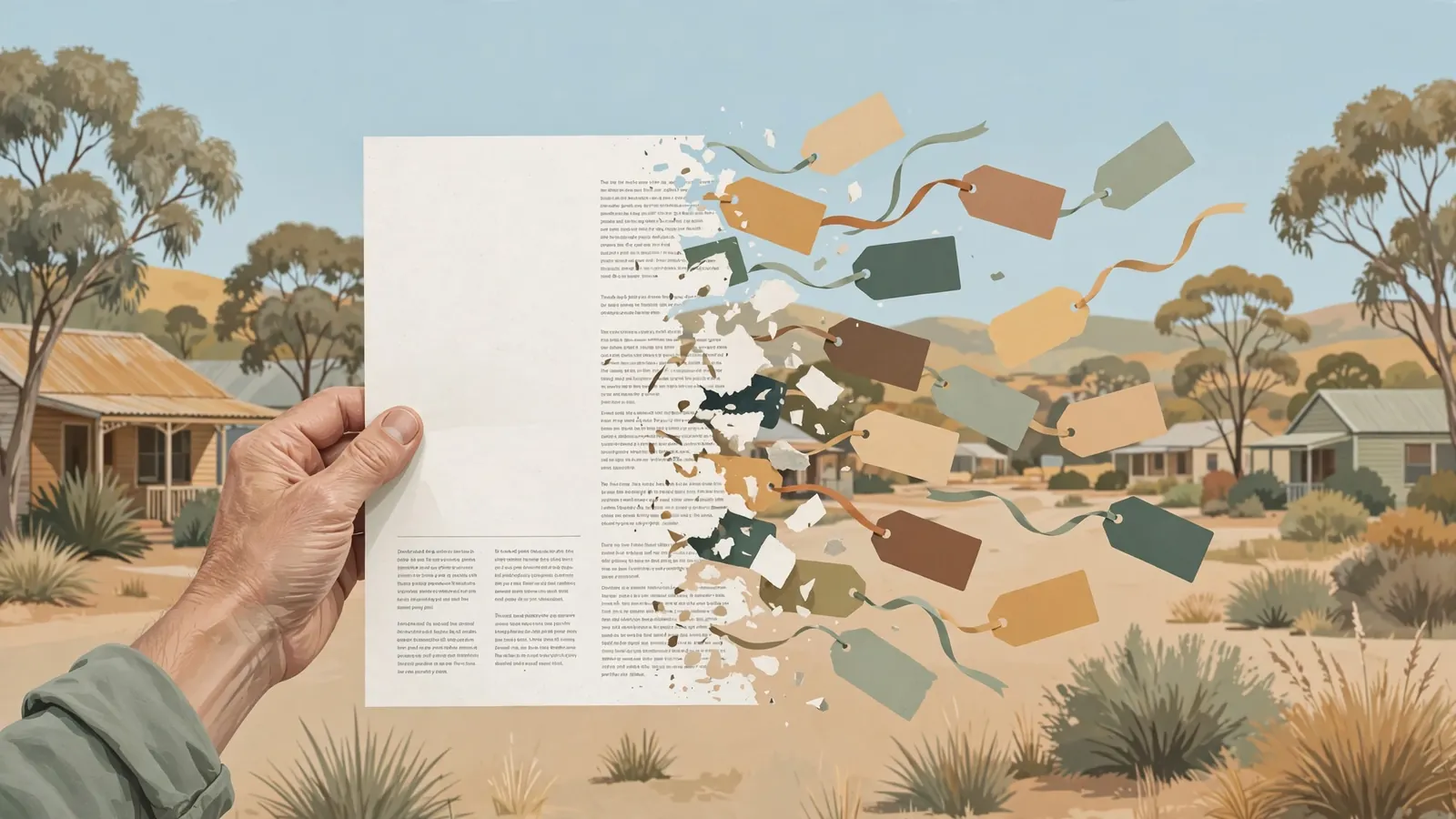
Pokies are not an advertising category to dress up
The restriction is especially clear for slots: they must not be advertised in any form. That rules out more than a direct “play now” message. A page should not use descriptions, imagery, comparisons or promotional framing to draw attention to slot-machine games for an Australian audience. Changing the label does not change the purpose.
This is why a page about pokies cannot responsibly promise a tour of titles, a guide to choosing one or a rundown of what is popular. Even without naming a particular title, that kind of material can encourage interest in a prohibited service. An article may discuss the boundary itself, but it should not create demand for the thing the boundary prevents operators from providing.
There is a temptation to think a “just information” label solves the problem. I have seen enough marketing copy to be sceptical. If the practical effect is to make a reader curious about where to play, what to try or how to get started, the neutral label does very little. The pitch is still there.
Watch what the wording asks you to do
When I read a page about online games, I look at the verbs. Does it explain what Australian law allows and prohibits? Or does it tell the reader to browse, compare, register, explore or give something a go? Those are different jobs. The first can help you understand the rules; the second can steer you towards a service that must not be offered here.
Descriptions can do the same work as direct instructions. Calling an experience “immersive” or “easy to get into” is not a legal explanation. Nor is describing a game as a way to unwind, pass the time or chase a win. That sort of framing borrows the language of lifestyle advertising, making the service feel routine and low-risk. I have fallen for polished language before. It can make a decision feel smaller than it is.
Do
- Use direct language to explain what Australian law allows
- Focus on understanding the legal boundaries
- Treat the law as the primary guide
Don't
- Follow instructions to browse, compare, or register
- Trust descriptions like "immersive" or "easy to get into"
- Use a website's design or wording as a substitute for the law
A comparison can also imply a recommendation without using the word “best”. If it weighs up features, highlights supposed advantages or tells you which option fits a particular player, it has moved beyond explaining the rules. In this market, a reader should not be nudged towards an offshore online casino through a ranked list, a “beginner’s guide” or a supposedly helpful selection of games.
Disclaimers do not make the pitch disappear
A familiar trick is to place a warning beside promotional material and hope the warning does all the ethical work. It does not. If the rest of the page encourages Australian readers to try prohibited online casino games, a sentence saying “check local laws” does not make that encouragement neutral.
I do not treat a small caveat as a substitute for the substance of a page. The overall message matters: what the page describes, what it praises, and what action it encourages. A site cannot make a prohibited promotion acceptable by calling it a guide, adding a commercial disclosure or placing a caution at the bottom. The wording and purpose still count.
The law is not asking the reader to work out whether a sales message is disguised well enough. The relevant boundary is that operators must not provide real-money online casino games to people in Australia, and advertising those services to Australian audiences is banned. So a responsible explanation should stop at the boundary rather than dress up a route around it.
What a careful page can actually say
A useful page can set out the rule in plain English. It can explain that real-money online casino games, including slots, are prohibited services when provided to customers in Australia. It can also make clear that an offshore online casino is not made lawful to offer here simply because it uses a foreign licence. That is meaningful context, not a recommendation.

A careful page can also help readers spot the difference between a legal explanation and an invitation. If the text starts telling you what to play, where to play or why a particular service is worth trying, it has left the ground of neutral information. That test is simple, and I find it more useful than trusting a page’s own label.
The language should stay direct. No coy hints. No “secret” access. No claims that a prohibited game is available to Australians if you know where to look. A reader should not have to decode an article to find out whether it is informing them or selling to them.
That line can feel less exciting than the copy that promises a world of choice. Fine by me. “A world of choice” is often just a sales phrase, while the legal position is much plainer: real-money online casino games cannot be provided to people physically in Australia, and advertising them here is banned. Pokies are not an exception to that rule.
I still notice when a page makes a prohibited service sound normal, especially when it wraps the pitch in the language of entertainment or personal preference. But that is exactly when I slow down. If an article is doing its job, it should leave you with a clearer understanding of the boundary—not a new reason to cross it.
Payments and Crypto: Keep the Claims Narrow
Payment language can make an offshore online casino sound like an ordinary service: a deposit button, a choice of currency, perhaps a promise that a withdrawal is simple. I have learned not to treat the payment screen as proof that the business behind it can lawfully serve people here. A familiar-looking checkout does not change the rules that apply to the wagering service.
The Interactive Gambling Act 2001 makes it illegal for operators to provide real-money online casino services to people physically located in Australia. That includes online casino-style services such as poker and table games. The restriction is about the service being offered, not just the label on a payment option or the design of a website.
That distinction matters when a page talks about payments. Describing ways to fund an offshore online casino, or directing readers towards one, would help promote a service that cannot lawfully be provided to Australian customers. I won’t do that. A payment method is not a workaround, and a list of ways to send money would be a sales pitch in practical terms, even if it were dressed up as neutral information.
Credit cards are not an option for online gambling services
Credit cards must not be accepted for online gambling services. That is the useful point to keep in view; there is no need to turn it into a guide to finding another route around the restriction. If a wagering service presents credit card payment as a way to fund online gambling, that should not be treated as a normal feature or a reason to trust the service.
I used to read payment labels as if they were a kind of reassurance: if a method appeared in a checkout, surely someone had checked that the whole arrangement was above board. That is a poor shortcut. A payment interface tells you what the operator says it can process. It does not establish that the operator is allowed to provide the underlying service to someone in Australia.

Nor does a polished checkout settle what happens if a payment is disputed, delayed or sent to the wrong place. Those are practical concerns, but they do not make an unlawful service lawful. It is easy to get pulled into comparing buttons and transfer options while missing the more basic question: why is this service being offered to you in the first place?
That is where I draw the line. I will not recommend an offshore online casino or explain how to pay one. The rule against advertising offshore and unlicensed online casinos to Australian audiences is not softened by presenting the recommendation as a payment comparison. Calling it a “payment guide” does not change what the guide helps a reader do.
Crypto does not change the underlying question
Crypto can attract attention because it sounds separate from familiar banking. But the name of the asset or payment rail does not change the nature of the service being funded. If the transaction is intended to support an offshore online casino serving someone in Australia, changing the form of payment does not make that service permissible.
That is as far as I would take the point. I am not going to claim that a particular token is accepted, that a particular wallet is reliable, or that crypto transfers are anonymous, reversible or faster. Those claims depend on details that cannot be assumed across services and circumstances. More importantly, a list of crypto options would steer readers towards funding an offshore online casino, which is not something to promote.
The same caution applies to broad claims such as “crypto-friendly” or “banking made easy”. They sound like practical help, but they can blur the central issue. A payment method may be presented as convenient while the service itself remains prohibited for Australian customers. Marketing language is not a legal explanation.
Why crypto doesn't change the rules
Changing the form of payment to cryptocurrency does not make a prohibited service permissible. If the transaction supports an offshore online casino serving someone in Australia, the underlying legal question remains the same.
When I see payment claims used to make a service feel routine, I try to separate the two questions. First: what is the service? Second: is it lawful for an operator to provide it to a person physically in Australia? A payment feature cannot answer the second question for you.
Payment claims are not proof of legitimacy
An operator can display familiar logos, use polished language or describe a transaction as “secure”. Those words alone do not establish that the operator is authorised to provide online casino services in Australia. In this market, real-money online casinos are prohibited by law; looking professional does not create an exception.
This is also why I avoid ranking payment options or naming a preferred route. A ranking would imply that there is a suitable way to fund the service. It could also make an offshore online casino easier to choose, even if the wording included a warning. A warning attached to a recommendation does not erase the recommendation.
There is a difference between explaining a legal boundary and helping someone cross it. It is reasonable to say that credit cards must not be accepted for online gambling services. It is not reasonable to turn that into a list of alternative ways to send funds to an offshore operator. I keep the explanation on the boundary, rather than supplying the next step.
The same goes for statements about withdrawals. Claims that money can be taken out quickly or without difficulty are not a substitute for a lawful basis to use the service. They may sound comforting, but they do not answer whether the operator should be providing it to Australians at all. “Easy withdrawals” is a promise about a transaction, not proof that the underlying offer is allowed.

Read the claim, not the shine
If a payment page says a transaction is available, that is only a claim made by the service. It does not tell you whether the service is legally permitted in Australia, whether the payment will be accepted, or what will happen if something goes wrong. I would not rely on a checkout screen to settle those questions.
A sensible way to read payment language is to strip away the sales words. “Instant” is a promise about speed. “Flexible” is a promise about choice. “Private” is a claim about handling information. None of those descriptions changes the prohibition on operators providing real-money online casino services to people in Australia, and none makes credit card acceptance permissible for online gambling services.
There is no useful payment recommendation to make for an offshore online casino. I would rather be plain about that than dress up a route to an unlawful service as consumer advice. Crypto does not create an exception, and a conventional payment label does not create one either.
For me, the practical takeaway is simple: do not confuse a payment option with permission. A payment screen can be persuasive; it can also leave out the question that matters most. Keep that question in view. The checkout is not the rulebook.
Bonuses and Low Deposits Without the Sales Pitch
A “welcome bonus” sounds like a little head start. A “low deposit” sounds like a smaller risk. I’ve learned not to treat either phrase as a plain description. They are sales language: one invites you to focus on something extra, the other on getting started with less. For people in Australia, though, the first question is not how attractive an offer sounds. It is whether promoting the service or inducement is allowed here at all.
Australian law prohibits operators from providing real-money online casino services to people physically in Australia. Advertising offshore online casinos to Australian audiences is also banned. That matters when a page puts a bonus, sign-up deal or low entry amount in front of you: the wording does not turn a prohibited service into a permitted one. Nor does describing a promotion as information, a comparison or an exclusive opportunity make it neutral. If the message encourages Australians to use an offshore online casino, the sales pitch remains the point.
There are also restrictions on advertising gambling inducements and promotions. The rules require particular care around the stated advertising window, from 5:00 AM to 8:30 PM. That is not a detail to wave away in small print. A promotion aimed at Australian readers cannot be treated as acceptable simply because its terms are tucked behind a link, labelled as a review, or paired with a responsible-gambling disclaimer. The format does not erase the promotional effect.
What “bonus” is doing in the sentence
When an advert says “bonus,” it frames the offer as a gain. The useful question is what the message is asking you to do in return. If it is designed to persuade you to open an account, deposit money or keep gambling, it is not merely a neutral explanation of a website. It is an inducement: a reason being presented to draw someone towards gambling.

That distinction can get blurred on pages that call themselves guides. A paragraph may compare welcome offers, describe a deposit match or highlight a special reward while insisting that it is only helping readers understand the market. But a friendly tone does not change the function of the words. If the copy makes a gambling service sound more appealing, it is doing promotional work.
I have caught myself reading the bright part first and leaving the conditions for later. That is how “extra” starts to feel like value before you have worked out what is being offered or what action the offer is meant to prompt. In this market, there is an earlier question: should an Australian audience be receiving that promotion in the first place? A tidy list of conditions cannot answer that for you.
Nor should a reader assume that a bonus becomes acceptable because it is described as “free.” That word is doing its own bit of persuasion. An inducement can still be a promotional message even if the language makes it sound costless or informal. The label is not a legal shortcut.
Why the time window matters
The stated period from 5:00 AM to 8:30 PM is important when assessing gambling advertising and promotions. It is not a promise that advertising outside those hours is automatically permitted. The underlying restrictions still matter, including the ban on advertising offshore online casinos to Australian audiences. Moving a message to a different time does not make an otherwise prohibited casino promotion lawful.
That sounds obvious when written down. It is less obvious in a feed, where a banner or sponsored post can look like an ordinary recommendation. A time label, a late-night post or a claim that a message is intended for another audience does not, by itself, settle whether Australians are being targeted. The substance and audience of the promotion matter; a clock is not a permission slip.
I would also be wary of copy that leans on urgency. Words such as “limited,” “exclusive” or “claim now” are meant to make you act before you pause. They do not provide evidence that an offer is lawful, suitable or worth your time. If the pitch is directed at Australians and promotes a prohibited online casino service, urgency only makes the promotional intent more obvious.
“Low deposit” is still a sales claim
A low entry amount can sound safer because the first step appears small. But “low” is a comparison, not a guarantee about what you may spend later or what the service is. It can draw attention away from the larger decision: whether the wagering service is legally available to Australian residents and whether promoting it is allowed.
I am not going to turn that phrase into a recommendation. A page that celebrates a small starting amount is still presenting a gambling service as easy to try. When the service is an offshore online casino, that is not a harmless consumer tip for an Australian audience. The fact that the pitch focuses on the initial amount rather than a bonus does not change its promotional purpose.
This is why a headline about bonuses and low deposits should not become a shopping list. Listing offers, ranking them or repeating their terms would give the reader a sales comparison that the rules do not permit this page to provide. A disclaimer below the list would not undo the invitation above it. Not a loophole.
There is another trap in the phrase “low deposit”: it encourages you to judge the offer by the first commitment alone. That is not enough to assess a service, and it says nothing about whether the service is lawful to advertise here. I have made the mistake of treating a small initial step as if it settled the whole decision. It doesn’t. The wording is designed to make entry feel simple; it cannot supply the legal context that the pitch leaves out.

Disclaimers do not neutralise the pitch
Commercial disclosures can help readers understand who is behind content, but they cannot be used to make a prohibited casino promotion appear neutral. Calling a page an affiliate review, adding a disclosure or saying that the material is for information only does not change an offer into non-promotional content if the page still encourages Australians to use an offshore service.
The same applies to familiar softeners: “we don’t recommend,” “for research only,” or “check the terms.” If the surrounding text names a reward, highlights a low entry amount and directs readers towards an operator, the overall message may still function as advertising. A caution label is not a substitute for complying with the restrictions.
I used to think the disclaimer was the important part because it looked like the honest bit. Now I pay attention to what the page wants me to do. If every paragraph is steering me toward a sign-up, the disclaimer is not steering me anywhere. The action matters.
 Pokies and Games: Australian Casino GuideBrowse Australian casino search topics spanning slot types, online pokies, casino formats and locations, from Adelaide and Brisbane to Sydney.
 Bonuses & Low Deposits at Australian CasinosExplore low-deposit casino searches alongside welcome offers, promo codes, cashback, and no-deposit bonuses, including free-spin options.
A better way to read a promotion
For an Australian reader, the safest way to approach a bonus claim is to separate the persuasive wording from the legal question. “Welcome,” “reward,” “exclusive” and “low” are not proof that an offer can be advertised here. They are words intended to make the offer more appealing. The service being promoted and the audience it targets matter more than the polish of the headline.
If a page directs you to an offshore online casino or presents its inducements as a reason to join, do not mistake the sales format for permission. The Australian rules prohibit advertising offshore online casinos to local audiences, and gambling promotions are subject to restrictions, with particular attention required during the 5:00 AM to 8:30 PM window. Those limits are not undone by calling a promotion a comparison or placing it inside a guide.
So I do not treat bonus copy as a reason to act. I treat it as a prompt to stop and check what the page is actually promoting. If the pitch depends on making an offshore casino seem like an easy, rewarding option for Australians, the upbeat language is not the useful part. The useful part is recognising the sales pitch for what it is.