
Separate POLi Claims from Checkout Facts
Everyday Australian payment habits offer context, but only a casino cashier can confirm whether POLi is available for deposits.

POLi and the Australian Payment Context
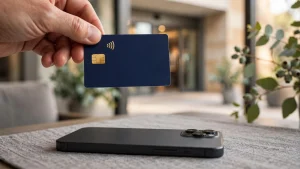
When I look at a payment option, I try not to confuse something familiar in everyday life with something confirmed at a particular online checkout. Australia has a strong habit of tapping to pay: contactless credit and debit cards are accepted almost everywhere, and mobile wallets such as Google Pay and Apple Pay are just as widely available. That tells you plenty about ordinary payments here. It does not, by itself, tell you whether a casino cashier offers POLi.
That distinction is easy to miss. A payment service can be familiar to Australian consumers, and still not be an option at a particular merchant. The reverse is also possible: a payment method may appear in a cashier without being a good fit for every customer or bank. Familiarity is context, not confirmation.
So if you are trying to establish whether an Australian-facing casino accepts POLi, the broader payment landscape only gets you so far. The common use of tap-and-go cards and phone wallets is a useful comparison for how people pay day to day. It is not evidence that POLi is available for gambling transactions, or that any particular site supports it. I would not fill that gap with a confident-sounding guess.
Top operators
If you’re looking for a casino payment option in Australia, check the available payment details and terms before choosing. This list offers a concise reference, but the information provided does not confirm Poli acceptance for any operator.
-
Ricky Casino
- Payout speed
- crypto under 1 hour, PayID 1-3 business days
- Min. deposit
- A$20 (A$30 to qualify for the bonus)
You can deposit from A$20, or from A$30 to qualify for the bonus. The listed payout times are under an hour for crypto and 1–3 business days for PayID.
-
SkyCrown
- License
- Tobique Gaming Commission
- Payout speed
- crypto ~10-15 minutes, fiat 1-5 days
- Min. deposit
- A$30
You can deposit from A$30. SkyCrown lists a Tobique Gaming Commission licence, with payouts taking around 10–15 minutes for crypto and 1–5 days for fiat.
-
LevelUp Casino
- License
- Curacao eGaming OGL/2023/174/0082 (Dama N.V.)
- Min. deposit
- A$15
LevelUp lists a Curacao eGaming licence, OGL/2023/174/0082, held by Dama N.V. Its minimum deposit is A$15.
-
JustCasino
- License
- Curacao Gaming Control Board
JustCasino lists a Curacao Gaming Control Board licence. That is the licensing detail provided for this operator.
-
House of Pokies
- License
- international iGaming licence – jurisdiction not named in the source
- Payout speed
- PayID 1-24 hours
- Min. deposit
- A$30 (PayID from A$10)
House of Pokies lists PayID payouts of 1–24 hours and a minimum deposit of A$30, with PayID deposits from A$10. Its source describes an international iGaming licence but does not name the jurisdiction.
-
WinSpirit Casino
- License
- Curacao eGaming OGL/2024/923/0383 (Antillephone N.V.)
- Min. deposit
- A$30
WinSpirit lists a Curacao eGaming licence, OGL/2024/923/0383, held by Antillephone N.V. Its minimum deposit is A$30.
-
Bizzo Casino
- License
- Curacao Gaming Control Board (TechSolutions Group N.V.)
Bizzo Casino lists a Curacao Gaming Control Board licence associated with TechSolutions Group N.V. No payment or deposit details are provided here.
-
Kingmaker
- Payout speed
- crypto ~90 minutes, fiat 1-5 days
- Min. deposit
- A$30
You can deposit from A$30. Listed payout times are around 90 minutes for crypto and 1–5 days for fiat.
-
Wild Tokyo
- License
- Curacao
- Payout speed
- crypto 30-60 minutes, fiat 1-5 days
- Min. deposit
- A$10
Wild Tokyo lists a Curacao licence and a minimum deposit of A$10. Payouts are listed at 30–60 minutes for crypto and 1–5 days for fiat.
-
LuckyVibe
- License
- Curacao Gaming Control Board OGL/2023/176/0095 (Hollycorn N.V.)
LuckyVibe lists a Curacao Gaming Control Board licence, OGL/2023/176/0095, held by Hollycorn N.V. No payment or deposit details are provided here.
I have made the basic mistake before: seeing a payment name mentioned in a general discussion and treating it as though it applied to the checkout I was looking at. Those are different claims. A method may be discussed as an Australian payment option, while a specific merchant may not list it, may not make it available to every customer, or may have changed its arrangements. Without a clear, current confirmation for the exact service, the sensible answer is simply that the general popularity of other payment methods does not settle the POLi question.
There is another important context that should not get lost in the payment terminology. Under the Interactive Gambling Act 2001, operators cannot provide real-money online casino games to people physically located in Australia. The Australian Communications and Media Authority is responsible for enforcing that law. The fact that someone can find a payment label or a cashier page online does not change the legal position of the service. Nor does it make an offshore casino locally approved.
That matters because payment language can make a service sound ordinary. “Australian payments” may suggest a familiar local checkout, but it is not a guarantee of local oversight or consumer protections. Australian consumer law does not protect players who use offshore casinos. I would keep that in mind before treating any payment option as a sign that a service is suitable or protected. A payment method is not a safety stamp.

The everyday comparison is still useful, just in a narrower way. Most Australians are accustomed to choosing between a card and a mobile wallet when paying in person or online. Those methods have a visible presence across ordinary commerce. POLi-specific acceptance at a casino is a separate question, and it needs its own confirmation. Assuming the same pattern applies would be like assuming every shop that takes contactless cards also takes every other payment service. It does not follow.
This is why I would separate three ideas in my head: what Australians commonly use, what a particular cashier actually lists, and what the law allows an operator to provide. They can sound like one topic when a page puts them together, but they are not interchangeable. A familiar payment habit cannot prove a cashier option; a cashier option cannot establish legal protection; and neither tells you that a service is lawful for operators to offer to people in Australia.
If POLi is the method you hoped to use, start with that distinction rather than with assumptions based on general Australian payment habits. The widespread use of contactless cards and mobile wallets gives useful background about consumer behaviour. It does not answer whether an Australian casino accepts POLi. I’d rather leave that unconfirmed than dress a guess up as a recommendation. No shortcut there.
What the Deposit Information Does—and Doesn’t—Confirm
A low-deposit search is often really a question about the first payment: how little can I put in, and will this payment route work? Those are separate details. A small minimum, even if one is displayed, would not by itself show that POLi is available. And a POLi label would not tell you what the minimum is. I wouldn’t treat either point as settled without a current, specific confirmation from the cashier.
That distinction matters because deposit language can sound more definite than it is. A page might mention a payment method in general terms, while saying nothing about the amount accepted, the currency, or whether that option is available to a particular customer. A figure attached to another method cannot be carried across to POLi. Nor does the phrase “low minimum” tell you what amount a cashier will accept.
I’ve been caught before by treating a broad payment claim as if it answered the practical question I had. It didn’t. The useful detail is not a confident-sounding line about easy deposits; it is whether the cashier actually presents the method and states the conditions before you commit. No guesswork.
For POLi, I would not quote a minimum deposit or a processing time as though it applied to Australian casino deposits. I also would not claim that a particular casino accepts POLi on the strength of a generic statement. Those points need to be established individually. If the details are not shown clearly, the honest answer is to leave them unfilled rather than turn a search phrase into a promise.

Processing time is another detail that can be confused with acceptance. A payment route being mentioned does not establish that it is available at checkout, and availability alone would not tell you when a deposit is credited. A timing estimate needs to refer to that method and the relevant cashier, not to a different bank-linked service or to deposits in general. Without that distinction, “fast” is just decoration.
The same goes for searches about the “best” place to deposit. A ranking cannot establish a POLi minimum or prove that the option is currently presented to Australian customers. Nor does a low entry amount settle what happens after registration, verification, or a change in payment availability. I would rather see a plain description of the deposit conditions than a polished label that leaves the actual amount and method unclear.
Account checks can also sit between a customer and a financial transaction. Online casinos commonly ask customers to complete identity verification before they can transact. That means the amount shown in a deposit discussion is not the only practical consideration: an account may need to pass the operator’s checks as well. It is worth understanding this before relying on an assumed quick route from registration to payment.
Do
- Verify POLi availability directly in the cashier
- Check specific minimum deposit requirements
- Confirm processing times for the method
Don't
- Infer POLi acceptance from general deposit claims
- Assume a "low minimum" applies to all methods
- Treat a generic "fast" label as a guaranteed timeframe
There is a wider issue behind the word “casino” in these searches. Under Australia’s Interactive Gambling Act 2001, operators are prohibited from providing real-money online casino games to people in Australia. The Australian Communications and Media Authority enforces that law. Players are not criminally liable simply for using an offshore site, but Australian consumer law does not protect people who use offshore casinos. That is a real difference, not a footnote to a payment choice.
So a low-deposit question deserves a narrow answer: don’t infer a POLi minimum from a general deposit claim, and don’t read a suggested amount as proof that POLi is accepted. Keep the amount, the method, and the processing estimate as separate facts. If one is not plainly confirmed in the cashier, don’t build a payment decision around it. Better an unanswered detail than a made-up one.
How to Read Claims About POLi-Accepting Sites
A payment logo on a page is a claim, not a receipt. I’ve learned not to treat a neat row of logos or a headline promising an easy deposit as proof that a method is available to every visitor. Payment options can be described broadly on an information page, while the cashier—the place where an account’s payment choices are displayed—may show something different. The distinction matters: a claim about a site is not the same as a confirmed option for a particular customer.

If you are assessing a statement that a casino takes POLi, look for where the statement comes from and what it actually covers. Does it appear in general promotional copy, an old review, or the operator’s own payment information? Is it specifically about deposits, or does the wording blur deposits and withdrawals together? “Accepts POLi” can sound complete while leaving those practical details unstated. Don’t fill the gaps in yourself.
The cashier is a more relevant place to verify a payment claim than a headline because it reflects the options presented within the account. Even then, a displayed method is not a promise that every transaction will go through. Account status, operator terms and payment-provider decisions can affect what happens. I wouldn’t read a logo on a landing page as a guarantee, or a single successful account’s experience as a rule for everyone.
There is another layer that gets overlooked: account checks. Online casinos commonly ask customers to complete identity and other Know Your Customer checks before handling financial transactions. That can affect whether an account is ready to transact, quite apart from what payment methods a site advertises. A payment claim alone says nothing about whether those checks have been completed or what requirements apply.
Be wary of wording that rolls several separate claims into one. A site might be described as taking POLi, as offering instant withdrawals, and as having a broad choice of games, all in the same breath. Those are different propositions. A payment method being named does not establish that it is available for cashing out, and it tells you nothing about the games on offer. Keep each claim in its own lane.
The word “best” is particularly slippery. It can mean easiest to use, cheapest, most reliable, or simply the option an article chooses to put first. Without clear criteria and current, specific support for each claim, a ranking is just a presentation. I would not treat a list labelled as the leading POLi sites as confirmation that any named operator actually offers the method to Australian residents. Names and rankings do not replace a check of the payment information.
There is also an important Australian context that payment copy can leave out. The Interactive Gambling Act 2001 prohibits operators from providing real-money online casino games to people in Australia. Australian consumer law does not protect players who use offshore casinos. That is not a minor footnote to a payment claim: a page describing a cashier option should not be mistaken for an assurance that using the service is locally authorised or that you have ordinary consumer protections.
My rule is plain: separate the wording from what it can prove. A claim may indicate what an operator says it supports; it does not, by itself, confirm availability for your account, successful processing, withdrawal support or legal protection. If those points are left vague, the sensible reading is not “probably fine”. It is “not established”. Short version: claims are not confirmation.
Withdrawal Speed Is a Separate Question
A payment method being available for a deposit would not, on its own, show that it can also be used to receive a withdrawal. Nor would it tell you how long a payout takes. Those are separate parts of a transaction, with separate rules. I used to treat a familiar payment logo as if it answered both questions. It doesn’t.
That distinction matters when someone describes a POLi casino as offering “instant withdrawals”. The word “instant” sounds simple, but it can blur together several different stages: a request being submitted, an operator reviewing it, a payment being sent, and money appearing in an account. A claim about one stage does not establish the timing of the others. Without clear terms for the specific service, there’s no sound basis for turning that label into a promised arrival time.
The same goes for whether POLi can receive a payout at all. A method used to move money into an account is not automatically a method for sending money back out. A cashier’s deposit choices and its withdrawal rules may be different. If the wording only refers to deposits, read it as a deposit claim—not as evidence of withdrawal support.
“Fast” is another slippery word. It may describe how quickly a request is handled, not when funds are available to spend. And “instant” in a headline is not a clock you can rely on. I’ve learned to look for the actual withdrawal terms, including which methods are available for payouts and how the operator defines processing time, rather than treating an attractive phrase as an answer.
There is a larger issue for people in Australia. Under the Interactive Gambling Act 2001, operators may not provide real-money online casino games to people physically located in Australia. Australian consumer law does not protect players who use offshore casinos. A fast-payout claim should not distract from that legal and consumer-protection context.
So, if you are trying to work out whether a POLi-related claim also means a quick payout, keep the questions separate. Does the claim concern deposits, withdrawals, or both? Does it state that POLi can be used to withdraw, or merely show the method among ways to pay in? What does it say about the payout process, and what event does its timing refer to? If those points are not clear, “instant” tells you very little.
No shortcut.
The 2026 Search, Without an Unsupported Yes-or-No
For 2026, I can’t responsibly give you a named casino and say it accepts POLi in Australia.

I know how tempting a short answer is. You look for a casino that takes POLi, see a confident “accepted” label and assume the detail is settled. I’ve learned not to treat a payment claim as timeless. Availability can change, and a page that mentions a method does not, by itself, settle what is available to an Australian customer in a particular year. A neat list can look useful while leaving the central question unanswered.
The year matters. A statement about a site at some earlier point cannot establish its payment arrangements in 2026. Nor does a general claim about casinos tell you which operator, if any, supports POLi for people in Australia now. So I won’t name a “best” POLi casino or present a set of sites as confirmed. That would turn an uncertain detail into advice you might rely on.
There is a more important Australian context, too. Under the Interactive Gambling Act 2001, operators are prohibited from providing real-money online casino games to people physically located in Australia. The Australian Communications and Media Authority enforces that law. Australian consumer law does not protect people who use offshore casinos, so an attractive payment claim should not be mistaken for a sign that the service is lawful or that you have ordinary consumer safeguards.

That legal point is separate from whether a payment method appears on a page. A POLi reference cannot establish that a casino is permitted to offer real-money games to Australians, and it cannot make an offshore service safer. I would not treat a payment logo, a search result, or a current-sounding headline as a substitute for that distinction.
If you came here hoping for a simple list, the straight answer is less satisfying: I can’t confirm which casinos accept POLi in Australia in 2026. I also can’t turn that uncertainty into a claim that none do. The careful answer stops there, rather than filling the gap with names or a recommendation.
No false certainty.
Payment Options and Games Are Not the Same Thing
A payment label and a game catalogue answer different questions. One concerns how an account might be funded; the other concerns what an operator offers. Seeing the words “POLi payment” beside a casino-related page does not tell you which games are available, whether any are accessible from Australia, or whether the operator may lawfully provide them here.
That distinction sounds obvious until a page bundles everything into one glossy claim. I’ve learned to split those claims apart. A payment option cannot, by itself, verify the contents of a site, the terms attached to an account, or the legal status of the service. It says nothing about a game being offered to Australian residents. Separate claims need separate evidence.
There is also a legal line that a payment label cannot change. Under the Interactive Gambling Act 2001, operators cannot provide real-money online casino games to people physically located in Australia. The prohibition covers casino-style services, including pokies. The Australian Communications and Media Authority is responsible for enforcing the Act. A payment method does not make a prohibited service permissible.

So when you encounter a phrase such as “casino games with POLi,” read it as a bundle of words, not proof that a particular payment method works for a particular game or operator. “POLi casino payment options” may sound like a neat package, but those are separate matters. A payment claim does not establish the operator’s permissions; a game-related claim does not establish a payment route. Keep the claims in their own lanes.
I also wouldn’t treat a page’s game descriptions as a reason to open an account or send money. Australian consumer law does not protect players who use offshore casinos. That matters more than whether a page makes its payment and game descriptions look like one seamless offer. The polish is not proof.
Short version: payment is not permission. Games are not payment options. If a page blurs those categories, slow down rather than assuming one claim confirms the other. And if the wording suggests real-money casino play is being offered to people in Australia, remember that the operator’s offer is prohibited under Australian law; a POLi label does not alter that.

This is a narrow distinction, but it stops a common leap: from a payment word on a page to an assumption about the whole service. A casino payment reference cannot certify what is playable, lawful, or protected. Keep those questions separate.
Australian Payment Habits as a Point of Comparison
Australian consumers are used to moving between payment options. Cards are familiar, mobile wallets such as Apple Pay and Google Pay are widely accepted, and services connected to bank accounts, including PayPal, are part of the mix. That flexibility is useful context, but it doesn’t tell you whether a particular payment method is available for a particular purpose.
I used to treat a familiar name in a payment conversation as a sign that it would work wherever I wanted to pay. That was a lazy shortcut. A method can be common in everyday life without being offered by a casino cashier; a casino’s payment list, in turn, doesn’t establish what is lawful or safe for someone in Australia. Familiarity is not confirmation.
Common Australian Payment Methods
Australians typically use contactless credit and debit cards, mobile wallets like Apple Pay and Google Pay, and bank-linked services such as PayPal.
That distinction matters when you see POLi mentioned alongside Australian casinos. The fact that people are comfortable switching between cards, wallets and bank-linked services such as PayPal cannot be stretched into proof that an Australian casino accepts POLi. Nor does it show that every site, or any specific site, supports it. That has to be established separately, not inferred from general payment habits.
There is a more important Australian context, too. Under the Interactive Gambling Act 2001, operators cannot provide real-money online casino games to people physically in Australia. Australian consumer law does not protect players who use offshore casinos. Those aren’t small details to set aside while comparing checkout options.
So I’d use local payment habits only as a point of reference: they show that Australians are accustomed to having different ways to pay, not that any one of them is available or appropriate for online casino gambling. A familiar checkout label can feel reassuring. It isn’t a green light.
Keep the distinction plain. Everyday use tells you what people may be comfortable with; it doesn’t verify a casino payment claim, and it doesn’t change the legal position. Familiar, not proof.
Casino Withdrawals May Follow Different Rules
A payment option shown for adding funds does not automatically work for cashing out. That distinction matters when you are checking whether POLi can be used for a casino withdrawal: a POLi option at deposit, by itself, would not establish that winnings can be returned through it. Deposit and withdrawal routes are separate terms, not two sides of a guaranteed transaction.

Amex offers a useful comparison, but it says nothing about POLi. A specialist review reports that not every Australian online casino it discusses allows withdrawals to Amex. The same type of review says individual casinos set their own Amex deposit and withdrawal limits, which can differ. Treat those details as operator-specific, not as a rule that applies across the market.
I have made the mistake of treating a familiar payment logo as if it settled the whole journey. It doesn’t. For any payment method, the cashier’s withdrawal options and the operator’s terms are what determine whether that route is available for a payout. A deposit route may be one-way, or withdrawals may be subject to separate conditions. Don’t infer otherwise from the method’s name appearing somewhere on a payment page.
Speed is a different issue again. A route being available for withdrawals would not, on its own, tell you how long a payout takes. Keep availability, conditions, fees and timing separate when reading payment information. Less guesswork.
There is also a more important Australian context than the cashier’s layout. The Interactive Gambling Act 2001 makes it illegal for operators to provide real-money online casino games to people in Australia. If you use an offshore casino, Australian consumer law does not protect you. A payment method does not change either point, and a listed withdrawal route is not a sign that the service is lawful or locally protected.
- Check the current cashier list for POLi availability
- Review account terms for identity document requirements
- Confirm the operator's payment verification process
- Verify if the method supports both deposits and withdrawals
Paying by POLi: What to Verify Before You Proceed
I’ve learned not to treat a payment logo or a line in a promotional blurb as proof that a method will be available to me. If a site claims you can pay by POLi, check what its own cashier currently lists for your account and location. Don’t assume a mention on another page means the option will appear when you sign in.
Read the account conditions alongside the payment information. Look for requirements on whose name must appear on an account, what identity documents may be requested, and whether the operator explains how it handles payment verification. If a condition is unclear, don’t guess or send sensitive details just to find out.
Identity checks are part of the financial process, not an optional afterthought. Online casinos commonly ask customers to complete a Know Your Customer assessment before carrying out financial transactions. In practice, that means you may be asked to confirm who you are before money-related activity is handled. I’d want to understand the operator’s stated requirements before sharing documents or bank information.
There’s a bigger point that payment descriptions can obscure. Under Australia’s Interactive Gambling Act 2001, it is illegal for operators to provide real-money online casino games to people in Australia. Australian consumer law does not protect players who use offshore casinos. A payment option appearing on a screen doesn’t change either of those things.
So keep the check narrow: is the POLi claim clearly stated by the operator, do the account terms explain identity checks, and can you understand what information the site wants before providing it? If the answers are vague, pause. “Easy payment” is just a label until the conditions are clear—and clarity about a payment method is not a guarantee of legal protection.

I wouldn’t hand over financial or identity details on the strength of a search result or an unexplained badge. Check the operator’s own current information, and remember that a listed method does not establish that a service is lawful for Australian residents. Stop there.
Bonus Claims Don’t Verify a Payment Method
A bonus mention and a POLi payment option answer different questions. One describes a promotion; the other would describe how a payment is made. Seeing both named together does not prove that POLi is available at checkout, or that a promotion can be used with it.
I’ve learned not to treat a bright “bonus” label as useful payment information. It can leave the important details unclear: whether the offer is real, who can access it, what conditions apply, and which payment methods count. None of that should be guessed from a headline. And a promotion is not evidence that a particular cashier accepts POLi.

For anyone in Australia, there is a more serious point before weighing any offshore casino promotion. The Interactive Gambling Act 2001 prohibits operators from providing real-money online casino games to people in Australia. Australian consumer law does not protect players who use offshore casinos. Promotional language does not change either issue.
So keep the two checks separate. A claim about a POLi-linked bonus cannot establish payment acceptance, and a payment claim cannot establish that a bonus is available or suitable. Read the terms rather than relying on a banner, and don’t treat promotional wording as a reason to send money or create an account.
“Exclusive” is just a label until the terms explain what it means. And even clear terms do not make an offshore casino service lawful to provide in Australia. No banner fixes that.
How do you check if casino sites accept Amex deposits?
Check the casino cashier for American Express before depositing. If it is listed, select it and enter your card details and deposit amount in AUD; your bank may still block the transaction.
What are the deposit and withdrawal limits at the best Amex casinos?
Each casino sets its own Amex deposit and withdrawal limits, so they vary by operator. Check the limits shown in the cashier before making a transaction.
Are there any fees for depositing with American Express?
Amex deposits are typically free, but a casino may add a surcharge, and currency conversion can incur a fee. Check the cashier’s terms for charges that apply to your transaction.
Can I withdraw winnings directly to my American Express card?
Sometimes, but not all casinos allow withdrawals to Amex. You generally need to have deposited with Amex first, and withdrawal fees may apply.
Which online casinos accept American Express for deposits?
Jackpot City Casino, Spin Palace, Ruby Fortune, Ignition Casino, Joe Fortune, and PlayAmo are among the operators listed as supporting Amex deposits for Australian players. Check the cashier to confirm availability before depositing.
Do I need to verify my American Express card before using it for online casino transactions?
You may need to complete the casino’s Know Your Customer checks before making financial transactions. Follow the verification requirements shown by the casino.
Can e-wallets be better for my casino deposits?
It depends on what matters to you: cryptocurrencies such as Bitcoin and Ethereum are described as offering instant deposits and withdrawals with limited or no fees, while bank transfers may take longer and cost more. Check which methods the casino accepts and their terms.