
Read the pattern, not the promise
Low volatility describes a pattern of more frequent, smaller wins—not a promise of reliable returns or a fixed outcome.

What “Low Volatility” Actually Tells You
When a game is described as low volatility, the label is about the pattern of its wins. It points to wins that tend to arrive more often but are smaller, with less pronounced movement in the amount won from one spin to another. That is the basic low-volatility meaning in pokies: a steadier-looking run of results, not a promise about what any particular spin will do.
I find it helps to picture the pattern rather than treat the term as a quality badge. A run might include several modest wins, each doing little to change the overall balance. In a more volatile game, the results may swing more sharply. The low-volatility pattern is comparatively restrained. “Steady” sounds comforting; it does not mean the game is paying you back reliably.
The word “frequent” can also be easy to overread. It describes a tendency in the pattern, not a schedule. There is no guarantee that a win will appear after a certain number of spins, or that a small win on one spin means another is close. A game can produce a quiet stretch even when its general profile is described as low volatility. The label is not a countdown.
Top operators
Low-volatility slots are about keeping swings in play more measured, but choosing where to play also means checking practical details. Use this list as a reference for the operator information available to you, and review a game's volatility before you play.
-
Ricky Casino
- Payout speed
- crypto under 1 hour, PayID 1-3 business days
- Min. deposit
- A$20 (A$30 to qualify for the bonus)
Ricky Casino lists crypto withdrawals as taking under an hour, while PayID withdrawals take 1–3 business days. The minimum deposit is A$20, or A$30 to qualify for the bonus.
-
SkyCrown
- License
- Tobique Gaming Commission
- Payout speed
- crypto ~10-15 minutes, fiat 1-5 days
- Min. deposit
- A$30
SkyCrown lists a Tobique Gaming Commission licence. Its stated withdrawal times are around 10–15 minutes for crypto and 1–5 days for fiat, with a A$30 minimum deposit.
-
LevelUp Casino
- License
- Curacao eGaming OGL/2023/174/0082 (Dama N.V.)
- Min. deposit
- A$15
LevelUp Casino lists a Curacao eGaming licence, OGL/2023/174/0082, held by Dama N.V. Its minimum deposit is A$15.
-
JustCasino
- License
- Curacao Gaming Control Board
JustCasino lists a Curacao Gaming Control Board licence. That is the licensing detail available for this operator.
-
House of Pokies
- License
- international iGaming licence – jurisdiction not named in the source
- Payout speed
- PayID 1-24 hours
- Min. deposit
- A$30 (PayID from A$10)
House of Pokies lists an international iGaming licence, though the jurisdiction is not named in the source. PayID withdrawals are stated as taking 1–24 hours; the minimum deposit is A$30, or A$10 when using PayID.
-
WinSpirit Casino
- License
- Curacao eGaming OGL/2024/923/0383 (Antillephone N.V.)
- Min. deposit
- A$30
WinSpirit Casino lists a Curacao eGaming licence, OGL/2024/923/0383, held by Antillephone N.V. Its minimum deposit is A$30.
-
Bizzo Casino
- License
- Curacao Gaming Control Board (TechSolutions Group N.V.)
Bizzo Casino lists a Curacao Gaming Control Board licence associated with TechSolutions Group N.V. This licensing information is the available detail for your reference.
-
Kingmaker
- Payout speed
- crypto ~90 minutes, fiat 1-5 days
- Min. deposit
- A$30
Kingmaker lists crypto withdrawals at around 90 minutes and fiat withdrawals at 1–5 days. The minimum deposit is A$30.
-
Wild Tokyo
- License
- Curacao
- Payout speed
- crypto 30-60 minutes, fiat 1-5 days
- Min. deposit
- A$10
Wild Tokyo lists a Curacao licence and withdrawal times of 30–60 minutes for crypto and 1–5 days for fiat. Its minimum deposit is A$10.
-
LuckyVibe
- License
- Curacao Gaming Control Board OGL/2023/176/0095 (Hollycorn N.V.)
LuckyVibe lists a Curacao Gaming Control Board licence, OGL/2023/176/0095, held by Hollycorn N.V. This licensing detail is available for you to consider.
What the label describes
Think of volatility as a shorthand for how winnings are distributed across play. For a low-volatility game, the broad description is more frequent, smaller wins and less fluctuation in winnings. It tells you something about the shape of the experience, not the result you should expect from a single moment.
That distinction matters because a small win can look significant when you are watching the reels, even if it barely changes the amount in front of you. Several little returns can make a session feel active. They do not necessarily add up to a large payout, and the label does not tell you how a particular series of spins will unfold.
If I see repeated small wins, I might take that as a clue that the game could be low volatility. It is only a clue. A short run is not enough to establish a game’s profile with certainty, and one big-looking result does not automatically disprove it either. The useful point is the overall pattern, not a single spin picked out of context.
A less dramatic pattern, not a promise
People often hear “low volatility” and translate it as “safe”. I would not make that leap. The label does not protect a balance, guarantee a win, or say that every session will feel smooth. It describes a tendency toward smaller, more frequent wins and less fluctuation. Actual results can still vary.
 Best Bonus Buy Slots in Australia: Access and DemosLearn how offshore access, demo play and bonus-buy mechanics differ; the Interactive Gambling Act 2001 bars Australian-licensed operators from offering online
 Australian online pokies: what to check firstLearn how offshore status, PayID deposits and wagering terms affect online pokies; Australia has no domestic online casino licences.
Nor does “low” mean there is no movement. Winnings can go up and down; the description is comparative. It signals less pronounced swings than you might associate with a higher-volatility pattern, not an absence of losing spins or a fixed level of comfort. The wording can sound more reassuring than the underlying information warrants.
That is why I treat the term as a rough description, not a verdict. When someone asks what a low-volatility slot machine is, the plain answer is a game associated with smaller wins arriving more often and winnings fluctuating less. That answer is useful as far as it goes. It does not tell you what you will personally win, or when.
The same idea applies whether you call them low-volatility slot machines or low-volatility casino games. The label describes a style of payout pattern, not a guarantee attached to the game. It may help explain why one game feels less swingy than another, but it cannot turn an uncertain result into a predictable one.
I used to give reassuring words more weight than they deserved. “Frequent” sounded like a reason to expect something soon. It isn’t. The term is about a general pattern, not a promise to the person sitting at the screen. Small wins can happen often and still leave you with no certainty about what comes next.
So, if you want the simplest reading of low volatility in pokies, keep it narrow: expect the description to refer to more frequent but smaller wins and comparatively modest fluctuations. Don’t read it as a forecast for your next spin. A label can describe a pattern. It cannot tell you how your own play will turn out.
This page is affiliate-driven and may contain sponsored links. Gambling involves risk, and you can lose money.
Hit Frequency, Payout Size and RTP Are Different Things
These terms often get bundled together in casino descriptions, as if one label tells you everything about how a game pays. It doesn’t. Volatility, hit frequency, payout size and return to player (RTP) describe different features. Mixing them up can make a game sound more predictable than it is.
Volatility is about the pattern of results: how much winnings tend to fluctuate and how payouts are distributed. Low-volatility games are associated with more frequent, smaller wins and less dramatic swings. Higher-volatility games tend towards a more uneven pattern, with longer stretches between hits and the possibility of larger payouts. That comparison is about the shape of the experience, not a promise about what will happen in your session.
Hit frequency is narrower. It refers to how often a game produces a win, but a win can be small enough to return less than the stake. So a screen showing a winning combination does not, by itself, tell you whether your balance has increased. A game can register hits often while still delivering modest payouts. Frequency alone says nothing about the size of each result.
Payout size is the amount returned when a winning result occurs. Low-volatility games may have smaller payouts and jackpots than other games, while a higher-volatility game may concentrate more of its potential return in less frequent, larger outcomes. “Big win potential” is a description of a possible payout pattern, not evidence that a large win is likely to arrive during your play.

RTP is a separate measure. It is a theoretical return calculated across extensive play, not a forecast for an individual or a short session. It does not tell you how often wins will appear, how large they will be, or when they might happen. Two games can have the same RTP and still feel very different: one may return value through frequent small wins, while another may have a more uneven pattern. The headline figure cannot show that difference on its own.
The reverse is true too. A low-volatility label does not establish a game’s RTP. It cannot tell you whether the theoretical return is comparatively high or low, and it does not guarantee that you will get back what you wager. “Steady” can sound reassuring, but it describes variation, not protection from losses. That distinction matters.
People often look for a combination of high RTP and low volatility, hoping to find a game that both returns more in theory and produces gentler swings. Those are separate characteristics, though, and neither one cancels out the uncertainty of the other. A high RTP does not make every session profitable; low volatility does not turn an unfavourable RTP into a favourable one. There is no shortcut from a pair of labels to a reliable personal result.
Volatility
Describes the pattern of results, including how much winnings fluctuate and how payouts are distributed.
Hit Frequency
Refers to how often a game produces a win, regardless of whether the payout exceeds the stake.
Payout Size
The actual amount returned when a winning result occurs, which varies between low and high volatility games.
RTP
A theoretical return calculated over extensive play, not a forecast for an individual session.
Game information can also require a closer look. A specialist review has reported that some sites use game configurations with lower RTP values. That is a reason to check the RTP shown in the game’s information panel before playing, rather than assuming that a figure mentioned elsewhere applies to the version in front of you. The panel may help identify the displayed setting, but it still cannot predict what your own results will be.
I’ve found that promotional language can blur these distinctions. “Frequent wins” sounds like “more money back” until you notice that the wins may be small, or that a hit has returned less than the amount wagered. And “high RTP” can sound like a session promise when it is only a theoretical measure. The wording is doing a lot of work. The numbers don’t tell the whole story.
When comparing higher- and lower-volatility games, keep the questions separate: how often might a win occur, how large might payouts be, how much do results tend to fluctuate, and what RTP is displayed? A single label cannot answer all four. Nor can a higher theoretical return guarantee a better outcome in the next spin.
That is the useful distinction: volatility describes the swings; hit frequency describes how often a win is recorded; payout size describes what a win returns; RTP describes a theoretical long-run return. Related, but not interchangeable. And none of them promises a profit.

What to Look For in Low-Volatility Games in 2026
Choosing a game is less about finding a magic label and more about deciding what kind of session you can live with. I learned that the hard way: I used to pick whatever sounded reassuring, then get annoyed when the experience did not match the picture in my head. “Low risk” can sound like “safe”; it is not. A game’s volatility label does not make it a sensible fit for every player.
Start with your own tolerance for uncertainty. If sharp swings make you tense or push you to change your stake impulsively, a lower-volatility style may feel more comfortable than a game with more pronounced ups and downs. That is a preference, not a prediction about what will happen next. A calmer-feeling pattern does not make a game reliable, and it does not remove the possibility of losing what you spend.
Then look at your session budget as a boundary, not a target to use up. Decide what you are prepared to lose before playing, and treat that amount as unavailable for everything else. If the money going in is needed for bills, food or other commitments, it is not a playing budget. I have ignored that distinction before and called it “just one more go.” Bad call.
A useful choice is one that fits both boundaries: your appetite for swings and the amount you can afford to lose. If a game makes you want to raise your stake whenever a spin disappoints you, it may not suit your temperament, whatever its label says. If you find yourself chasing a particular result, stepping away is more useful than trying to pick a supposedly better title.
Do
- Set a session budget as a strict boundary
- Match the game's volatility to your own tolerance for uncertainty
- Use a budget that is not needed for bills or food
- Step away if you find yourself chasing a result
Don't
- Treat "low risk" or "steady" as a guarantee of safety
- Use your budget as a target to be used up
- Let promotional language dictate your game choice
- Assume a popular title automatically fits your limits
Read the game information, not the sales language
Promotional words are easy to overread. “Steady” describes a style of play, not a promise that a session will go smoothly. Before deciding, take a moment to understand the game’s stated features and consider whether they suit the experience you want. Keep that separate from claims about what you will win: no description can tell you what your own spins will return.
I also try not to turn a label into a ranking. “Best” depends on what you value, and a game that feels comfortable to one person can feel tedious or stressful to another. A title’s popularity or bright presentation does not tell you whether it fits your budget or your reaction to losses. Make the decision around your own limits, not the confidence of the wording on a screen.
If you are unsure how you respond to a particular style, pause before committing money rather than treating a label as evidence. The point is not to find a game that removes uncertainty; that is not what these games can do. It is to avoid choosing an experience that predictably tempts you to spend beyond what you set aside.
I keep one question in view: if the session goes badly, can I accept the loss without trying to win it back? If the honest answer is no, the sensible choice is not another game. It is not to play at that time. That is less exciting than a recommendation, but it is a better test of whether a choice fits.

For Australian readers, this page is for adults aged 18 and over. Gambling involves risk, and you can lose money. This is affiliate-driven content and may include sponsored links; that disclosure is not an endorsement or an invitation to use an online casino. I’m not suggesting that a low-volatility label makes gambling harmless. It only helps describe the sort of experience a game presents, while your own limits still matter.
Online Pokies and the Australian Legal Context
The legal position is about who may provide online casino games to people in Australia. Under the Interactive Gambling Act 2001, operators must not offer real-money online casino games, including pokies, to people located here. The restriction applies to Australian-based operators as well as providers outside Australia: an overseas location does not make offering those services to Australians lawful.
That rule can be easy to miss when a site presents itself as a familiar casino or labels a game as low volatility. The label describes a feature of the game; it does not change the legal status of the service offering it. Nor does a polished website, an advertising claim or a prominent game catalogue override the restrictions in the Act.
The Australian Communications and Media Authority (ACMA) is the federal body responsible for enforcing the Act and monitoring compliance with federal interactive gambling laws. Its work includes action against websites that provide prohibited interactive gambling services and sites that advertise them in Australia. ACMA can ask Australian internet service providers to block access to such websites. That is an enforcement tool aimed at limiting access; it does not turn a blocked service into a lawful one or amount to approval of any site that remains accessible.
ACMA has reported blocking more than 1,455 illegal gambling and affiliate websites since November 2019 following enforcement action. The broader point is that enforcement has involved both website blocking and services leaving the Australian market.
A blocked page is not the only sign that enforcement is taking place, and a page that opens is not proof that the operator is permitted to offer online casino games in Australia. Access and legality are separate issues. ACMA’s ability to request blocking also means that a site someone has seen before may later become unavailable. I would not read continued access as a green light. It isn’t.
This is worth keeping in mind when reading material about the best low-volatility online games. A game’s volatility, its name and its provider do not determine whether the operator may offer it to Australians. The same legal restriction applies whether the game is described as a slot, a pokie or an online casino game. The question of whether low volatility is good for a player is separate from the question of whether the service can legally be offered here.
This page is affiliate-driven and may include sponsored links. That disclosure does not change the law or amount to a recommendation to use a gambling service. This content is intended for adults; gambling carries a risk of losing money. The legal information here concerns restrictions on operators and ACMA’s enforcement role, not a guide to finding or accessing online casinos.

When I see a site leaning hard on a phrase such as “available in Australia”, I treat that as a marketing statement, not a legal explanation. The relevant distinction is whether an operator is allowed to provide the service to people in Australia under the Interactive Gambling Act 2001. ACMA’s role is to enforce that framework and monitor compliance, including through requests to internet service providers to block prohibited services or their advertising.
In short, the law restricts operators from offering real-money online casino games to people in Australia, and ACMA has powers to act against prohibited services and related advertising. A game’s low-volatility label cannot answer the legal question. Nor should a site’s accessibility be mistaken for regulatory approval.
Casino Claims Versus the Smaller-Payout Reality
The phrase “low volatility” can sound like a promise of an easier ride. It isn’t. It describes a pattern of play, not a better deal: low-volatility pokies may deliver smaller payouts and jackpots than games with bigger swings. If you’re expecting regular little wins to add up to a standout result, that expectation can set you up for disappointment.
I’ve been caught by the reassuring side of the pitch before. A screen showing wins often feels more encouraging than one showing long gaps between them. But a win is not automatically a meaningful payout, and a run of small returns can leave you with less than you started with. The label doesn’t tell you that the game will repay what you put in, or that a jackpot is likely to appear.
That is the trade-off worth keeping in view. A steadier-feeling game may suit someone who dislikes sharp changes in their balance, but the possible prizes may be more modest. A game with larger potential payouts can come with a more uneven experience. Neither description makes one option universally better; it simply signals different expectations. “Comfortable” is not the same as profitable.
Marketing language can blur that distinction. Words such as “steady” or “frequent” describe how wins may appear, not what they are worth to you overall. A string of small wins can look like progress while barely offsetting earlier losses. I now try to separate the feeling of activity from the actual result. Two different things.
It also helps to treat claims about low volatility as descriptions, not guarantees. The category does not promise a particular jackpot, a minimum payout, or a positive outcome for a session. Even if small wins appear often, their size matters; a busy-looking screen can still produce a disappointing balance.
A specialist review has also described frequent wins as a possible reason players may add more money to their casino accounts. That is a reported behavioural risk, not a rule that applies to everyone. Still, it captures a trap worth noticing: small returns can make continued play feel justified, even when the overall result is going the other way.
So if you hear a game described as “gentle,” read that as a claim about the shape of the experience, not protection from loss. Smaller prizes may feel less dramatic, but they can still leave you down. The label can set expectations. It cannot settle the outcome.

Pragmatic Play: What Can—and Can’t—Be Verified
A provider name is not a volatility label. Seeing Pragmatic Play on a game tells you who made it; it does not, by itself, tell you how often it pays or how large its wins tend to be. I’d be wary of calling a particular title a low-volatility pick without a reliable game-specific basis for that description. A confident-sounding list is easy to publish. That does not make it dependable.
If you’re looking into low-volatility Pragmatic Play pokies, keep the question narrow: what information applies to the individual game, rather than to the provider as a whole? Volatility can differ from one title to another, so a reputation attached to a studio cannot settle the matter. Nor does a game’s theme, feature set or polished presentation tell you how its payouts are distributed. Labels need evidence.
Demo mode can be useful for exploring games with different volatility levels. You can get a feel for how a title behaves during play and compare the experience with another game, without treating the provider’s name as a shortcut. But a demo is a way to explore, not a forecast of what will happen with real-money play. It cannot promise that the same sequence of wins will occur later, or establish what your results would be.
That distinction matters because a few spins can create a convincing impression. A run of small wins may make a game feel steady; a quiet stretch can make the same game feel entirely different. Neither short experience proves a dependable pattern. I’ve made the mistake of treating an early impression as a verdict. It wasn’t.
Using Demo Mode
Demo mode allows you to explore how different volatility levels behave and compare the experience between titles without risking real money, though it cannot forecast actual real-money results.
So I’d separate two things: using demo mode to sample different styles of play, and claiming that a named Pragmatic Play title has a verified low-volatility profile. The first can help you explore. The second needs game-specific support, not a provider name or a few memorable spins. Less guesswork.
Smaller Bets on Multi-Payline Games
A multi-payline game can make bet sizing less intuitive. The stake for a spin may be spread across several lines, so the amount attached to each line can be smaller than the total shown on the spin button. I’ve made the mistake of focusing on the per-line figure and overlooking what the whole spin would cost.
One piece of practical advice is to keep the total bet smaller on a machine with multiple paylines. The idea is to have more chances for a line to connect on each spin without making each individual stake larger. That is a feature of how the bet is arranged, not a promise that a spin will pay. A result can still return nothing, and more lines do not turn a game into a reliable way to win.
If you are examining a game, check how it displays the total stake before any spin. Make sure you understand whether the amount shown applies to every active line or to the whole spin; the game’s information panel or controls should make the setup clear. If the bet controls are confusing, I would not guess.
“More chances” sounds reassuring. It is not protection. A smaller stake may reduce the cost of an individual spin, but repeated spins still involve money at risk, and a sequence of outcomes can go either way. The low-volatility label does not change that basic point.
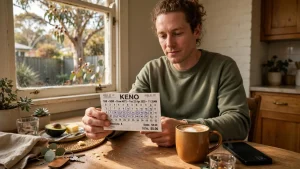
I now treat the displayed total as the number that matters, rather than the smaller-looking line amount. If the total does not fit what I am willing to lose, the sensible move is to stop there—not to raise or adjust the stake in the hope of forcing a result.
How Low-Variance Games Can Stretch a Session
A session can feel less stop-start when small payouts arrive regularly. With low-variance pokies, those frequent, modest returns may slow the pace at which your balance falls compared with a game where wins are less frequent and swings are larger. That can make the play last longer. It does not mean your money is protected, or that it will last for any particular length of time.
I used to treat a run of small wins as proof that I was “doing well”. Really, the balance was still moving, and a payout could be smaller than the amount I had put into play. The calmer rhythm can make it easier to lose track of that. A longer session is not automatically a better one.
Think of low variance as a description of how a game may feel over a stretch of play, not a way to make a bankroll grow. Smaller, more frequent payouts can stretch the balance, but they can also be outweighed by continued play. Set a stopping point before you begin, and stop when you reach it rather than waiting for the next hit to change the picture.
That distinction matters. “Reduced risk” does not mean no risk, and a steadier experience is still gambling. You can lose the money you choose to spend. This content is affiliate-driven and includes sponsored links; that does not make gambling a safe way to earn or preserve money. Online gambling content in Australia is for adults aged eighteen and over. If gambling is causing harm, seek support rather than extending a session.
Frequent Wins Can Still Lead to More Deposits
A run of small wins can change how a session feels. You see money come back, even if the balance has not moved much overall, and it is easy to read that activity as a reason to keep going. I know that mental shortcut: “I’m winning” sounds reassuring, but it says nothing about whether I am ahead.
One affiliate review describes frequent small payouts as something that can prompt players to add more money to their accounts. That is a reported behavioural risk, not proof that every player reacts this way. Still, it is worth noticing how the pattern can work: a few modest returns may soften the sting of losses, then make another deposit feel like a small step rather than a fresh decision.
That is where I have had to be blunt with myself. A payout is not a refund, and a busy-looking game does not make the next deposit more likely to pay off. If I start topping up because the wins feel encouraging, I have stopped judging the session by what I can afford and started chasing the feeling.
A useful pause is to decide in advance what amount, if any, you are willing to spend, then stop when it is gone. Do not treat small wins as extra permission to raise that limit. If you feel pulled to deposit again, step away instead of negotiating with yourself.

This page is affiliate-driven and includes sponsored links. Gambling can lead to financial loss; access to gambling content in Australia is for adults aged 18 and over.
A Steadier Session Still Can Cost You Money
The label “low volatility” can sound like a safety feature. It isn’t. It describes a pattern of play, not a promise that your balance will hold up. A game may produce frequent small wins and fewer sharp swings, yet the money you stake can still run down.
I used to treat a calmer-looking session as a sign I had more control. That was the mistake. A win on screen doesn’t undo earlier losses, and a run of small payouts doesn’t guarantee the next spin will return anything. The pace can feel less punishing while the overall result is still negative. Less dramatic. Still a loss.
So what does low volatility mean in slots? It points to the shape of the wins and fluctuations, not protection from losing. It cannot tell you how your own session will end. I now try to make the choice fit my risk tolerance and the amount I’ve set aside for that session, rather than reading “steady” as “safe.” If losing that amount would cause a problem, the label doesn’t change that.
This page is affiliate-driven and includes sponsored links. That disclosure does not make gambling safer or mean you should use any service. Gambling involves risk, and you can lose money. Online gambling content in Australia is for adults aged 18 and over; this information is not an offer to play.
Keep the distinction in mind: a lower-variance pattern may feel gentler, but it cannot protect your funds or turn a losing session around. The label describes the ride. It does not promise where you’ll finish.