
Know what access to offshore pokies really means
A practical look at legal limits, payment risks and offer conditions behind real-money and free-play pokies.

Real-Money Play Comes With a Legal Catch
The legal distinction is easy to miss when a site lets you register from Australia: the Interactive Gambling Act 2001 targets the company offering the service, not the individual player. A company cannot legally provide real-money online pokies to people in Australia without a domestic licence. No Australian online casino licences have been issued, so there is no locally licensed casino for real-money play.
That does not mean the law treats a player as though they were operating the site. Australians are not made liable simply for playing on an offshore casino that accepts them. But that narrow point can sound more reassuring than it is. An overseas site being accessible, or taking your details, does not give it Australian authorisation. Nor does it put an Australian regulator or court between you and the operator if a dispute arises.
I used to hear “legal for players” and let the phrase do too much work. It tells you who the law is aimed at; it does not tell you that a site is safe, that a withdrawal will be paid, or that you have a local path to get help if it is not. Different questions. That distinction matters most when actual money is involved.
The practical problem is the gap between being able to use an offshore service and having protection under Australian law. If an offshore casino refuses to release winnings, Australian players have no legal recourse in Australia to force payment. A complaint may be possible through the operator’s own process, but that is not the same as having a domestic licensing body or local legal remedy to rely on. Once the operator is outside the Australian system, the player may have little leverage beyond whatever the company chooses to do.
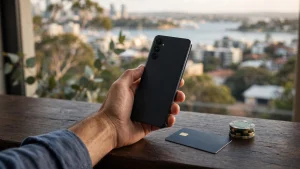
That is why “real cash” should not be read as a simple description of the game mode. It also means accepting that the relationship is with an overseas business, under arrangements that may not give you the protections you expect at home. A polished page and a working account login do not change that. Neither does the fact that the site accepts Australian customers.
There is another point that can catch people after they have already played. A specialist review of offshore casinos reports that many require identity checks before a first withdrawal. The requested documents can include a photo of your ID and proof of address; some operators may also ask for a selfie holding your ID. Those checks may be presented as routine account verification, but handing over sensitive documents is still a serious decision. You would be sharing them with an offshore business, not an Australian-licensed casino.

I would not treat a verification request as proof that a site is legitimate, any more than I would treat a completed registration as proof that a withdrawal will go smoothly. It tells you that the operator wants documents. It does not settle what happens if the account is restricted, the documents are rejected, or a balance is disputed. The basic risk remains: your practical options can be limited if the business is beyond Australian legal reach.
So when you see claims about online pokies for real money in Australia, separate the player’s legal position from the operator’s. The law does not make the individual player the target simply for playing offshore. At the same time, there is no Australian-licensed online casino, and offshore play does not come with Australian legal recourse if winnings are withheld. Those facts can sit together, even if a site’s wording tries to blur them.
I know the temptation to focus on the immediate details: whether the page loads, whether an account can be opened, whether a balance appears on screen. I have made that mistake of treating access as reassurance. It is not. Before treating any displayed balance as money you can count on, remember that the operator may be offshore and that a dispute over payment may not have a local remedy.
No local safety net.
Pokies in Australia: The Rules and the Reality
When you look into online pokies in Australia, it helps to separate the rules on paper from what you may see on a screen. The Interactive Gambling Act 2001 prohibits operators from providing real-money online casino games to people in Australia. The law is aimed at the businesses offering the service, not at making an individual player the target of that prohibition. That distinction matters, but it does not turn an offshore site into a locally regulated one.
The main domestic regulator is the Australian Communications and Media Authority, or ACMA. It enforces the Act and can take action against illegal offshore gambling services, including blocking access to them. Australian internet service providers are required to comply with ACMA’s blocklist. So a site that appeared accessible before may later fail to load. That can be frustrating, but a working page is not evidence that the operator is approved in Australia.
I used to treat a site being visible in search results as a kind of informal green light. It isn’t. A block can interrupt access; it cannot assess every claim on a page or ensure that a customer will be treated fairly. And if a site shifts address after being blocked, that change does not make it a domestic service. Keep those points separate.
Age and access are different questions
The legal age for gambling in Australia, including online pokies, is 18. Being old enough to gamble does not mean every online service is permitted to offer you real-money play. Age is one rule; the restrictions on operators are another.

That distinction is easy to miss when an offshore site accepts registrations from Australian residents or displays games in Australian dollars. Those details describe what the site allows, not whether it holds an Australian authorisation. There is no Australian-licensed online casino. The practical concern is that an offshore operator is outside the local licensing and complaint framework for online casinos. If a dispute arises, you should not assume that Australian authorities can compel the site to resolve it.
I’m wary of language that makes access sound like approval. “Available” only means you can reach a page at that moment. It says nothing about the legal status of the service, the protections it offers, or whether it will honour a request later. Plain distinction. No shortcut.
What safer-gambling tools can and can’t do
Deposit limits, loss limits, session time limits and self-exclusion are standard responsible-gambling tools. Where offered, they can help put boundaries around spending or time, and they are worth understanding before you use them. A limit is only useful if you know what it covers and how it works. Read the terms on the site itself, rather than assuming that a button labelled “limit” means the same thing everywhere.
Self-exclusion also needs a careful look. BetStop is Australia’s national self-exclusion register, but it applies to Australian-licensed operators; it does not bind offshore sites. That means registering with BetStop should not be treated as a way to block access to every offshore gambling service. If a site operates outside the Australian licensing system, it may not be covered by the same exclusion arrangements. That gap is worth taking seriously.
The same caution applies to safer-play features offered by an offshore site. A tool may be displayed, but the presence of a setting does not by itself establish that an Australian regulator oversees it or that it will work across other sites. If you need support to stop gambling, don’t rely on an offshore account setting as your only barrier. Use support available to you in Australia and consider steps that reduce access more broadly.
Read the situation, not the sales language
A site can use familiar Australian terms, show local payment options or advertise controls without becoming locally licensed. Those details are not substitutes for the legal framework. ACMA’s role is to enforce the Interactive Gambling Act and block access to illegal offshore services; it is not a quality badge for sites that remain reachable.
That’s the reality behind looking for online pokies in Australia: the rules restrict operators, ACMA can block illegal services, and the minimum gambling age is 18. Responsible-gambling tools can help set boundaries, but BetStop does not extend to offshore operators. I’d keep those points in mind before treating a smooth sign-up or a visible game lobby as reassurance. A page loading is just a page loading.
Bonus Fine Print Can Turn a Small Offer Into a Big Bet
A “$500 bonus” sounds like $500 added to your balance. The small print may mean something quite different: you cannot withdraw until you have wagered a specified total. That figure is the wagering requirement, often written as a multiplier such as 40x. The multiplier’s base matters just as much as the number beside it.

A specialist review gives a useful illustration: a $500 bonus with a 40x requirement means $20,000 in bets before any winnings become withdrawable. That is turnover, not a target you can expect to reach with $20,000 left over. Every losing spin still counts toward the required wagering, while your balance can shrink along the way. The offer’s headline value tells you nothing about how much might remain when the conditions are met.
Now compare a bonus that applies to both your deposit and the bonus credit. In the same specialist review’s example, a $500 deposit plus a $500 bonus at 35x creates a $35,000 wagering target. The maths is 35 multiplied by the combined $1,000, not just by the bonus. A short sentence in the terms can change the amount of required betting dramatically.
I used to glance at the multiplier and miss the part explaining what it applied to. That was the costly bit. Check whether the requirement is based on bonus funds alone, the deposit and bonus together, or another stated amount. If the terms are unclear, don’t assume the smallest interpretation.
A specialist review suggests looking for requirements of 35x or lower and describes anything above 40x as punishing. Treat that as a rule of thumb, not a promise that a lower multiplier makes an offer worthwhile. Even a smaller target can be a poor trade if the eligible games, contribution rules or withdrawal conditions make it hard to complete. Read the full terms before accepting credit, rather than judging an offer by the amount displayed beside the sign-up button.
Calculating Wagering
-
1
Identify the base
Determine if the requirement applies to the bonus alone or the combined deposit and bonus.
-
2
Apply the multiplier
Multiply that base amount by the wagering requirement (e.g., 40x).
-
3
Determine the target
Calculate the total turnover required in bets before any winnings become withdrawable.
“No deposit” can sound like there is nothing to lose. But a no-deposit or sign-up offer can still come with wagering conditions, game restrictions and rules about when winnings can be withdrawn. Free credit is not the same as unrestricted cash. The practical question is not just how much is advertised; it is what you must do before any balance can leave the account.
Free spins need a separate check. A specialist review notes that an offer may cap how much of the resulting winnings can be cashed out. So even if the spins produce a larger balance, the withdrawal terms may limit what you can actually claim. Find the cap and any attached wagering requirement in the terms before you treat a displayed win as money available to withdraw.
I now read the offer backwards: start with the withdrawal conditions, then work out the wagering base and multiplier, and only then look at the headline. If the wording leaves you guessing, the uncertainty is part of the deal. Not free money.
PayID Payments: Convenient, but Not a Safety Check
PayID can make a transfer feel more straightforward because you use an alias rather than entering a set of account details each time. That alias may be an email address, mobile number or ABN. PayID sits on top of Australia’s New Payments Platform (NPP), the system that carries the transfer; it is not a separate bank account or a promise that a payment will go through.

To use PayID for a real-money deposit, you first need to link it to a bank account. The NPP is supported by all major Australian banks, and transfers on it use end-to-end encryption. Those are useful facts about the payment infrastructure. They do not tell you who operates the site receiving a payment, what protections apply to your money, or whether a particular transaction will be accepted.
That distinction is easy to miss. I’ve seen a familiar payment logo and felt an unwarranted sense of reassurance. It only tells you something about the route a payment may take. PayID support is not evidence that a site is licensed, that its games are fair, or that it clearly discloses a pokie’s return-to-player (RTP) setting. A payment method cannot answer those questions.
A specialist review has described PayID as being handled like other qualifying deposit methods on the services it assessed. That is a description of those services, not a universal rule about every operator or a safety endorsement. Payment options can differ, and the conditions attached to a transfer depend on the parties involved. I would not treat a method appearing in a cashier as a quality check.
There is another practical wrinkle: a transfer can be stopped by the bank. A specialist review reports that some Australian banks, including institutions among the Big Four, sometimes block PayID transfers to known gambling merchants. That is not a guarantee that your own bank will block one, nor that every transaction will clear. A payment may be declined even when your PayID is active and the details appear correct.
If a transfer fails, don’t assume that repeatedly trying different details will solve it. Check the payment instructions and contact your bank through its normal channels if you need to understand a declined transaction. Avoid sending money again until you know whether the first attempt was rejected or is still being processed. That is a basic way to prevent confusion, not a promise that the transaction can be reversed or resolved.
PayID also does not change the larger risk of sending money to an offshore gambling site. Australian law prohibits operators from providing real-money online casino games to people in Australia, and there is no Australian-licensed online casino. The payment rail does not give you local recourse if an offshore operator withholds winnings. A transfer can be technically secure while the arrangement on the other end remains risky. Different questions.
So if you are comparing PayID options for pokies, separate the mechanics from the judgement. Ask whether the transfer is linked to your bank account, whether the bank may decline it, and what the site says about processing and verification. Then assess the operator and game information independently; don’t let a familiar payment symbol do that work for you. Convenient, not a safety check.
Free Play and Free Spins Have Different Strings Attached
“Free” can describe two different things, and I used to lump them together. Practice play is a way to try a pokie without staking your own money. Free spins, by contrast, are an offer attached to a particular game or promotion. The spins may cost you nothing to use, but that does not automatically mean any resulting winnings are yours to withdraw without conditions.

That distinction matters when you see a page promising free online pokies in Australia. A practice mode is about playing without a cash stake; a free-spin offer is about promotional terms. One may simply let you explore how a game works. The other can come with rules that affect what happens to winnings. Same friendly word. Different deal.
I’ve learned not to count a displayed balance as money I can take out. With practice play, the balance can be part of the simulation, rather than a cash balance. With promotional spins, a win may be subject to conditions set out by the offer. Read the terms attached to that specific promotion before treating the amount on screen as withdrawable.
A specialist review reports that free-spin winnings may be subject to a cash-out cap. In plain English, that means there can be a maximum amount you are allowed to withdraw from winnings generated by the spins, even if the game displays a larger figure. The cap is not something to assume applies to every offer, but it is a term worth looking for. Fine print matters here.
Check whether the offer is genuinely practice play or promotional spins, which game it applies to, and what restrictions govern winnings. Look specifically for language about maximum cash-out amounts. If the terms are unclear or hard to find, the word “free” does not fill in the blanks. I’ve made that mistake: seeing a no-cost offer and imagining there was nothing else to understand.
Do
- Use practice play to explore how a game works
- Check for maximum cash-out caps on free spins
Don't
- Treat practice balances as withdrawable cash
- Assume "free" means there are no strings attached
There is a simple way to keep the two categories straight. Practice play lets you use a game without risking your own stake; it is not a promise of cash winnings. Promotional free spins are an offer, and their conditions can shape whether and how winnings can be withdrawn. Don’t let the same label blur that difference.
“Free” is a label, not a full explanation. The detail is in the terms.
E-Wallets, Bank Blocks and the Cost of Card Deposits
E-wallets such as Skrill and Neteller still appear in specialist reviews of gambling payments, which describe them as popular for their speed and relative anonymity. That can make them seem like a tidy middle step between a bank account and a gambling transaction. But “anonymous” is doing a lot of work there: it does not mean a payment is untraceable, or that an account avoids checks. It describes a degree of separation from sharing bank details directly with a merchant, not a cloak.

I used to read a familiar payment logo as a quiet endorsement. It isn’t. A method being available tells you how a transfer might be processed; it does not tell you whether a gambling service is lawful, dependable or suitable. Keep those questions apart. Neat interface. Different issue.
Banks create another point of friction. Specialist reviews report that Australian banks and card companies are increasingly blocking transactions to known gambling sites. A payment can therefore be declined even when the card or account works elsewhere. A block is the bank’s decision about a transaction, not a sign that a gambling service has passed a safety check. And a successful payment is no proof of that either.
Cards can also cost more than the amount you enter. A specialist payment review warns that a credit or debit card gambling deposit may be processed as a cash advance. Depending on the bank or card issuer, that can mean a fee of 3–5% and interest starting immediately, rather than after the usual purchase grace period. The exact treatment is down to the issuer, so the card’s terms matter more than the deposit screen’s cheerful confirmation.
That distinction caught me out: I looked at the amount sent, not the way the bank classified it. If a transaction is treated as a cash advance, the cost can start piling up before you have even considered what happens next. Check your card terms or ask the issuer how gambling transactions are handled before deciding whether to use it. Don’t assume a debit card is automatically free of fees.
Deposit minimums are another detail to check before moving money. A specialist review of gambling payment options reports that many operators set minimum deposits between AU$10 and AU$20, while some accept AU$5. Those figures are not a promise about any particular service, and a low minimum does not make a payment low-risk. Read the conditions shown for the specific method, including any fees or restrictions, before you commit.
The boring part is the useful part: know what your bank may charge, what it may block, and what the payment provider actually promises. A wallet, card or transfer is only a route for money. It cannot make the destination safer.
What “Top” Really Means When You’re Comparing Pokies
Top operators
Choosing an online pokies site is easier when you can check practical details such as payment timing, minimum deposits and licensing information. Use this list as a starting point and verify the terms that matter to you before signing up.
-
Ricky Casino
- Payout speed
- crypto under 1 hour, PayID 1-3 business days
- Min. deposit
- A$20 (A$30 to qualify for the bonus)
Ricky Casino lists crypto payouts in under an hour and PayID payouts in 1–3 business days. The minimum deposit is A$20, or A$30 to qualify for the bonus.
-
SkyCrown
- License
- Tobique Gaming Commission
- Payout speed
- crypto ~10-15 minutes, fiat 1-5 days
- Min. deposit
- A$30
SkyCrown lists the Tobique Gaming Commission as its licensing authority. Its stated payout times are around 10–15 minutes for crypto and 1–5 days for fiat, with a A$30 minimum deposit.
-
LevelUp Casino
- License
- Curacao eGaming OGL/2023/174/0082 (Dama N.V.)
- Min. deposit
- A$15
LevelUp Casino lists a Curacao eGaming licence, OGL/2023/174/0082, under Dama N.V. Its minimum deposit is A$15.
-
JustCasino
- License
- Curacao Gaming Control Board
JustCasino lists the Curacao Gaming Control Board as its licensing authority.
-
House of Pokies
- License
- international iGaming licence – jurisdiction not named in the source
- Payout speed
- PayID 1-24 hours
- Min. deposit
- A$30 (PayID from A$10)
House of Pokies lists an international iGaming licence, though the jurisdiction is not specified. PayID payouts are listed at 1–24 hours; the minimum deposit is A$30, or A$10 with PayID.
-
WinSpirit Casino
- License
- Curacao eGaming OGL/2024/923/0383 (Antillephone N.V.)
- Min. deposit
- A$30
WinSpirit Casino lists a Curacao eGaming licence, OGL/2024/923/0383, under Antillephone N.V. Its minimum deposit is A$30.
-
Bizzo Casino
- License
- Curacao Gaming Control Board (TechSolutions Group N.V.)
Bizzo Casino lists the Curacao Gaming Control Board as its licensing authority, with TechSolutions Group N.V. named.
-
Kingmaker
- Payout speed
- crypto ~90 minutes, fiat 1-5 days
- Min. deposit
- A$30
Kingmaker lists crypto payouts at around 90 minutes and fiat payouts in 1–5 days. Its minimum deposit is A$30.
-
Wild Tokyo
- License
- Curacao
- Payout speed
- crypto 30-60 minutes, fiat 1-5 days
- Min. deposit
- A$10
Wild Tokyo lists a Curacao licence and crypto payouts in 30–60 minutes; fiat payouts are listed at 1–5 days. Its minimum deposit is A$10.
-
LuckyVibe
- License
- Curacao Gaming Control Board OGL/2023/176/0095 (Hollycorn N.V.)
LuckyVibe lists a Curacao Gaming Control Board licence, OGL/2023/176/0095, under Hollycorn N.V.
“Top” sounds like a verdict, but it can hide the detail that matters: the return setting attached to the game at that particular casino. I used to treat a familiar title as if it came with one fixed figure wherever I found it. That assumption doesn’t hold for every pokie.
A specialist review notes that some game providers let casinos choose between several RTP settings for the same game. So two versions with the same title may have different stated return percentages. The name on the screen alone won’t tell you which setting is in use. Check the game information and the casino’s published details, and look for the RTP assigned to that version. If it isn’t clearly stated, a “top” label doesn’t fill in the gap.
That still isn’t a promise about what happens next. RTP describes a setting, not the result of a particular spin or a prediction for your session. I’ve made the mistake of reading a high-sounding figure as if it meant a win was due. It doesn’t.
Each spin is generated separately by the game’s Random Number Generator, so one result doesn’t make the next one more likely to match it. A run of losses isn’t a signal that a win is waiting, and an earlier win doesn’t make another one more certain. No pattern to chase.
That’s why I’d compare the published return setting rather than trust a ranking, a “best” badge or a familiar game name. Those labels can make a comparison look settled when the underlying setting may differ. They can’t turn random outcomes into reliable ones.
If you’re weighing up pokies, separate the two questions: what RTP setting is listed for this version, and what do you understand about the uncertainty of every spin? The first can help you compare information. The second keeps that information in perspective. Neither makes a game a sure thing.
Reddit Chatter, Bonus Credit and the Cost of Cards
A confident Reddit post can sound like a proper review, especially when several people repeat the same claim about an offer. I treat that as a lead to check, not proof that the terms are fair or that a payout will go smoothly. A screenshot may show a headline figure and leave out the conditions that decide whether bonus credit can be withdrawn.
“Bonus credit” does not necessarily mean cash in your balance. It may be promotional funds that have to be wagered before any related winnings become withdrawable. The key detail is the wagering requirement: the turnover multiplier and what amount it applies to. A specialist review suggests treating 35x or lower as a point to look for, while calling requirements above 40x punishing. That is one reviewer’s assessment, not a guarantee that a lower figure makes an offer worthwhile. Read the actual terms, including which games count and whether restrictions apply.
- Read the written terms and conditions
- Check the turnover multiplier
- Verify which games contribute to wagering
- Check your card issuer's fees for gambling deposits
Small print matters. A lot.
Community posts can also gloss over how the deposit was funded. A specialist payment review warns that a card gambling deposit may be classified by a bank or card issuer as a cash advance. That can mean a fee of 3–5% and interest starting immediately. The exact treatment depends on the card provider, so a successful payment does not tell you what it will cost on your statement.
I used to focus on the bonus number and only later ask what I had agreed to do for it. That order is backwards. If a post says an offer is “easy to clear,” check the written terms rather than taking the poster’s confidence as evidence. And if the offer depends on a card deposit, check the card terms too. Bonus credit can carry wagering conditions; a card charge can carry costs of its own. Neither is made harmless by a popular comment thread.
New Pokies: A Fresh Release Doesn’t Mean a Better Return
A new release can look like a clean slate: unfamiliar theme, polished features, plenty of talk around it. I used to treat “new” as a reason to expect a better deal. It isn’t. The release date tells you when the game appeared, not what return setting is running where you play.
Some game providers let casinos choose between different RTP settings for the same pokie. So one title can have different published return percentages at different casinos. A specialist review reports this kind of variation; it is a reason to check the setting attached to the version being offered, not to assume every site uses the same one.
That detail is easy to miss when the game’s name and artwork are identical. If a casino displays an RTP figure, check that it refers to the specific version available there. If it does not make the setting clear, the game’s fresh-release status cannot fill in the gap. Neither can a familiar title or a confident-sounding description.

I’ve made the mistake of reading the launch buzz as useful information about the game’s return. It was just buzz. New features may make a pokie feel different to play, but they do not establish its RTP. And a figure shown for one casino is not proof of the setting used by another.
The practical comparison is less exciting than the trailer: find the return setting for the particular game at the particular casino, and treat anything else as unknown. You are not comparing just a title; you are checking which version has been made available. If that distinction is buried or absent, I would not guess.
Fresh release. Same homework.
Practice Spins Still Run on Random Outcomes
Practice mode can make pokies feel like a harmless place to spot a pattern. I’ve done the same thing: kept spinning because a near-miss seemed to hint that a win was due. It doesn’t. The next result isn’t shaped by the spins before it.
A pokie uses a Random Number Generator (RNG) to determine each outcome. That means every spin is separate, whether you’re playing for practice or watching the same game produce a run of wins and losses. A dry spell doesn’t make a win more likely on the next turn, and repeated tries don’t teach you when to press the button.
Practice spins can still show you how a game looks and feels. But they can’t reveal a reliable sequence to follow, or tell you what a later spin will do. What looks like a rhythm is just a run of random results.
That was my mistake: I treated repetition as evidence. It wasn’t. If you use practice mode, take it as a way to try the controls, not as a test of a strategy that can predict outcomes. Random stays random.